
Electricity Explained: Why Your Electric Bike Battery is Just a Very Expensive Water Bucket
Or: How I Learned to Stop Worrying and Love Ohm’s Law

Start where you are. Use what you have. Do what you can.
Pay attention. Do your best. Pay it forward.
The rest will take care of itself.
This is what I mean when I say pay attention - if I could learn this, maybe you can too. This isn’t about what to think, it’s about how we could think. Let me show you how electricity actually works by starting with something you already understand: filling a bucket with a garden hose.
Because that’s literally what electricity is - water pressure, hose thickness, and bucket filling, except with electrons instead of H2O. Once you see it this way, everything from your phone charger to massive industrial systems makes perfect sense.
The Fuse: Your Electrical Overflow Valve
Before we dive into the big picture, let’s talk about the most overlooked safety device in your house—the humble fuse or circuit breaker. Think of it as the pressure relief valve on your water system.
The Safety Math:
Your electrical “pipe” (cable) can safely handle 16 amps of “water flow”
But we set the fuse at 10 amps—20% under the limit
Why? Because when electrical “pressure” spikes, you want that fuse to blow before your expensive “plumbing” (cables) starts melting
It’s like setting your pressure cooker to release steam at 14 PSI when it can technically handle 16 PSI. Better to waste a little steam than buy a new kitchen.
The Beautiful Simplicity:
Cable rating: 16A (what it can handle)
Fuse setting: 10A (your safety margin)
When current exceeds 10A → fuse blows → system shuts down safely
No electrical fires, no melted cables, no insurance claims
This same principle scales from your house all the way up to massive industrial systems.
The Water Garden That Powers Your World
Picture this: You’re standing in your backyard with a garden hose, trying to fill a bucket. The hose starts thin, but here’s the magic—heat expands the hose.
The Heat-Expansion Principle:
Cold hose = thin = restricted flow (low amperage)
Hot hose = expanded = more flow capacity (higher amperage)
But too much heat = melted hose = electrical fire
This is why electrical cables get warm under load—the current flow creates heat, which expands the conductor, which allows more current, which creates more heat. It’s a natural feedback system with built-in limits.
The Teaching Framework: The One-Hour Bucket Challenge
Let’s say you want to fill a bucket in exactly one hour. You have three variables to work with:
Volt = Water Pressure (How Hard You Push)
Low pressure (12V): Gentle stream, works but slow
Medium pressure (120V): Good steady flow
High pressure (230V): Powerful stream, fills faster
Ampere = Hose Thickness (How Much Can Flow)
Thin hose (1A): Restricted flow, even with high pressure
Medium hose (10A): Good balance of flow and control
Thick hose (100A): Massive flow capacity
Watt = Bucket Fill Rate (How Much Water Per Hour)
Small bucket target (100W): Easy to fill in one hour
Medium bucket target (1000W): Needs decent pressure and hose size
Large bucket target (10,000W): Requires high pressure AND thick hose
The One-Hour Math: If you want exactly 1000 watts (a full medium bucket) in one hour:
Option 1: High pressure (230V) × thin hose (4.3A) = 1000W
Option 2: Medium pressure (120V) × medium hose (8.3A) = 1000W
Option 3: Low pressure (12V) × thick hose (83A) = 1000W
Same bucket filled in same time, different combinations of pressure and flow.
The Three-Phase Symphony: Why Everything Electrical Comes in Threes
Your local power station is basically a giant pressure washer with commitment issues. Inside, there’s a magnet spinning past three coils of wire—imagine three garden hoses arranged in a triangle, with someone running around the middle with a really strong magnet.
The Three-Phase Dance:
Coil 1: Magnet passes → electrical pulse (like someone stepping on your hose)
Coil 2: Magnet passes → another pulse
Coil 3: Magnet passes → third pulse
This creates what we call three-phase power—three separate streams of electrical “water” that are slightly out of sync with each other. It’s like having three people taking turns stepping on three different hoses, but they’re coordinated so there’s always steady pressure.
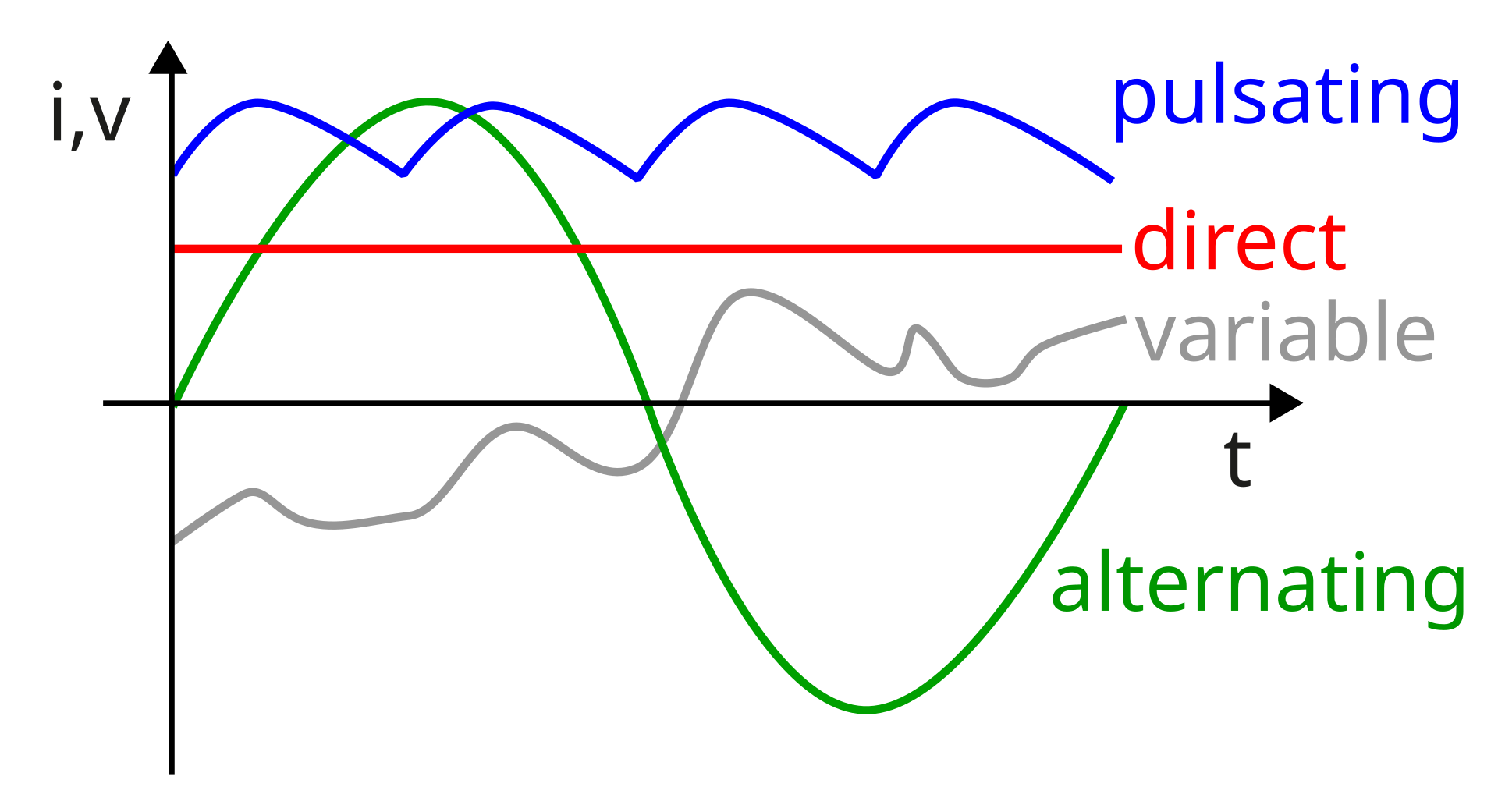
Why Three Phases Matter:
Motors run smoother with three-phase power (no pulsing, just steady rotation)
Power transmission is more efficient
The load balances across all three phases
Your electric bike motor, the Malmbanan trains, industrial equipment—all use this same three-phase principle
The Instant Journey: From Generator to Light Bulb
Here’s something that blew my mind when I first understood it: The exact moment electricity is created at the power plant, it’s instantly at your light bulb. Not “travels to” your light bulb. IS AT your light bulb.
Think of the entire electrical grid as one giant, connected water system. When the generator creates pressure at one end, that pressure appears instantly throughout the entire system—just like when you turn on a faucet, the pressure change is felt immediately throughout your house’s plumbing.
The Voltage Transformation Journey:
Generator: Creates 3-phase power at ~25,000V (high pressure)
Step-Up Transformer: Increases to 400,000V+ for long-distance transmission
High-Voltage Lines: Carry power across hundreds of kilometers
Substations: Step voltage down in stages
Local Distribution: Finally arrives at your house at 230V
Why Step Up the Voltage?
This is where the long hose analogy becomes crucial. Higher voltage = less current loss over distance.
Imagine trying to fill a bucket using a really long garden hose:
Low pressure (low voltage): Water barely trickles out the end—most energy lost to friction in the long hose
High pressure (high voltage): Strong flow even through the long hose—much less energy lost
The Power Grid Math:
Power = Voltage × Current
To send the same power over long distances: double the voltage = half the current needed
Less current = dramatically less energy lost as heat in the cables
This is why power lines use 400,000V+ instead of household 230V
The Long Hose Problem: Why Your Town Gets 230V
Here’s the beautiful engineering solution hidden in plain sight. The electrical grid is designed exactly like a municipal water system, but with one crucial difference—we can instantly change the “pressure” at different points in the system.
The Transformation Process:
Power Plant: Generates 3-phase electricity at 25,000V
Step-Up Transformer: “Pressure booster pump” increases to 400,000V
Transmission Lines: “Main water pipes” carry high-voltage power across country
Substation: “Regional pressure reducers” step down to ~10,000V
Local Transformer: “Neighborhood pressure regulator” brings it to 230V for your house
The Long Hose Reality: Just like water loses pressure in a long hose due to friction, electricity loses power in long cables due to resistance. But here’s the clever part:
Low voltage + long distance = massive losses (like trying to water your garden with a 1km garden hose)
High voltage + long distance = minimal losses (like having a high-pressure main line that feeds local taps)
Why 230V at Your House:
High enough for efficient power delivery to appliances
Low enough to be relatively safe for household use
Perfect balance for running everything from LED lights to electric kettles
Standard across Europe (Sweden uses 230V, 50Hz)
The Three-Phase Connection: Even though your house gets single-phase 230V, it comes from a three-phase system. Think of it like this:
The main “water line” (transmission) has three separate high-pressure streams
Your house taps into one of those streams
Your neighbors tap into the other streams
This balances the load across all three phases
The entire system—from the spinning magnet at the power plant to your light bulb—operates as one connected network where pressure changes instantly throughout the whole system.
Effektlagen (Power Law): The Swedish Water Equation
Now we get to Effektlagen—the power law that governs everything electrical. It’s embarrassingly simple:
Volt × Ampere = Watt
Or in water terms: Water Pressure × Hose Size = How Much Stuff You Can Actually Do
Breaking It Down:
Volt (Pressure):
230V in your wall socket = 2 kg of water pressure in the hose
12V in your car = gentle garden sprinkler pressure
The “push” behind the electrical water
Ampere (Hose Thickness):
10 amp circuit = garden hose
16 amp circuit = fire hose
100 amp circuit = industrial pipeline
How much electrical “water” can flow at once
Watt (Actual Work):
Your TV: ~100W = filling a coffee cup per minute
Electric kettle: ~2000W = filling a bathtub per minute
Electric bike motor: ~250W = filling a medium bucket per minute
The Generator-Motor Reversibility: The Ultimate Energy Trick
Here’s where it gets beautiful. Every electric motor is just a generator running backwards. This isn’t a metaphor—it’s literally the same device doing opposite jobs.
Motor Mode (Normal Operation):
Electricity flows IN → Creates magnetic fields → Shaft spins → Does work
Your bike motor: battery power → spinning → wheel turns → you move forward
Generator Mode (Regenerative Braking):
Shaft spins → Creates magnetic fields → Electricity flows OUT → Charges battery
Your bike braking: wheel momentum → motor spins → generates power → charges battery
It’s like having a water pump that can either pump water uphill (motor) or generate electricity when water flows downhill through it (generator). Same device, different direction of energy flow.
The Electric Bike Battery: Your Personal Water Tower
Your electric bike battery is essentially a water tower that stores electrical pressure for later use. When you pedal up a hill and the motor kicks in, you’re releasing stored electrical “water” from your battery tower through the motor.
The Beautiful Efficiency:
Battery stores at 36V or 48V (your personal water pressure)
Motor controller adjusts Hz to change wheel speed (like adjusting tap flow)
More Hz = faster spinning = more speed
Less Hz = slower spinning = more torque for hills
Braking = motor becomes generator → puts “water” back in the tower
The Frequency Trick: Soft Start Magic
Here’s where Swedish engineering gets elegant. Instead of just turning motors on and off like a water tap (which creates electrical “water hammer”), we use frequency drives for smooth operation:
Soft Start Process:
Start at low Hz (gentle water flow)
Gradually increase Hz (slowly open the tap)
Motor spins up smoothly (no electrical shock to the system)
Adjust Hz for desired speed (perfect flow control)
This is why your electric bike doesn’t jerk you forward like a mechanical bull when you hit the throttle—the controller gradually increases the Hz frequency to the motor.
The Safety Net: Circuit Breakers as Pressure Relief Valves
Remember those 10-amp circuit breakers in your electrical panel? They’re pressure relief valves for your electrical water system.
The Swedish Standard:
10A × 230V = 2300W maximum (before the “pipe” bursts)
Circuit breaker trips = pressure relief valve opens
Prevents electrical “flooding” (fires)
Protects your expensive electrical “plumbing”
Real-World Ohm’s Law: How to Never Have Cold Feet Again
Here’s where the water analogy meets Swedish practicality. This trick for making heated shoe insoles using basic electrical principles.
The Problem: Cold feet in Swedish winters The Solution: Custom heated insoles using Ohm’s Law
Method 1: Resistive Heating (Simple but Wasteful)
Target: 4 watts of heat at 12 volts
Using P = V × I: 4W ÷ 12V = 0.33 amps needed
Using V = I × R: 12V ÷ 0.33A = 36 ohms resistance required
Iron wire: ~1.5 meters for 36 ohms
Result: Pure heat, but energy goes to warming wire
Method 2: LED Circuit (Engineer’s Solution) But here’s what an unnamed electrical engineer from an iron mine taught me—a more elegant approach using LEDs:
The LED Math:
12V supply voltage
3V LED forward voltage
12V ÷ 3V = 4 LEDs in series per string
But we want controlled current, so: 3 LEDs in series + current limiting
17 parallel strings × 3 LEDs = 51 total LEDs
Why This Works Better:
LEDs convert electricity to light + controlled heat
No resistive losses—energy goes to useful output
LEDs reach maximum operating temperature (warm but safe)
Plus/minus polarity critical—get it wrong, no light, no heat
Much more efficient than resistive heating
The Circuit Pattern:
12V(+) ─┬─ LED(+)─LED(+)─LED(+) ─┬─ 12V(-)
        ├─ LED(+)─LED(+)─LED(+) ─┤
        ├─ LED(+)─LED(+)─LED(+) ─┤
        └─ [17 parallel strings] ─┘
The Engineering Insight: Instead of wasting energy as heat in resistors, use LEDs that give you both light AND controlled heat at their maximum operating temperature. It’s like getting both illumination and warming for the same electrical “water flow.”
Test the circuit before you judge—this is field-proven engineering from someone who knows how to keep equipment running in Swedish mine conditions.
The Energy Multiplication Magic: Heat Pumps vs. Resistive Heating
Here’s where electricity becomes truly clever - energy multiplication through system control:
Regular Electric Heating Element:
Input: 1 kW electricity
Output: 1 kW heat
Efficiency: 100% (all electricity becomes heat)
Method: Direct conversion - electricity → resistance → heat
Heat Pump System:
Input: 1 kW electricity
Output: 3-4 kW heat (COP of 3-4)
Efficiency: 300-400% (3-4 times more heat than electricity used)
Method: Energy extraction - electricity controls compressor → compressor moves existing heat
The Ground Source Magic (Bergvärme):
The ground below your house maintains a stable temperature year-round. This temperature equates roughly to the average annual air temperature of the location, usually 7–12°C at a depth of 6 metres in northern climates. In Sweden, the heat is typically collected by circulating fluid in wells 100-200 metres deep.
The Glycol Loop System:
Borehole Loop: Glycol (antifreeze) mixture pumps down through hose into borrhål
Ground Heat Exchange: Cold glycol absorbs stable ground heat → returns warmer
Circulation Pump: Small electrical pump moves glycol through the loop
Plattvärmeväxlare (Plate Heat Exchanger): Transfers heat from glycol loop to house heating system
Heat Pump: Compressor takes that stable ground heat and amplifies it to 45-55°C for radiators
The Electrical Energy Breakdown:
Compressor: Main electrical load
Circulation pump: Small electrical load (maybe 100W)
Controls/electronics: Tiny electrical load
Total electrical input: Controls much larger thermal energy transfer
COP Result: Typical practical values for heat pumps are in the range 2-4, meaning 2-4 units of heat for every unit of electricity
Easier Explanation: The Ground as Your Energy Bank Account
Think of it this way - the ground under your house is like a huge savings account full of thermal energy:
The Energy Bank:
Ground temperature stays constant 7-12°C year-round at 6 meters depth
This is “free” energy stored by solar heating over many years
Your heat pump is like an ATM that withdraws this stored energy
The Transaction:
You “spend” 1 kW of electricity to operate the heat pump
The heat pump “withdraws” 2-3 kW of thermal energy from the ground
You receive 3-4 kW total heat for your house
The electrical energy acts as your “transaction fee” to access the much larger ground energy
Why Sweden Loves This:
Almost a quarter of all single-family houses in Sweden have ground source heat pumps
Modern heat pumps run at COP of 4-5, compared to 2.5 in the past
100-200 meter boreholes are typical, delivering three units of heat for each unit of electricity
Stockholm makes permitting easy with e-platforms for drilling applications
The Bottom Line: Instead of burning fuel or using electric resistance to create heat, you’re using a small amount of electricity to harvest much larger amounts of free thermal energy that’s already stored in the ground. It’s like having a thermal energy mine in your backyard.
The Bottom Line
Understanding electricity isn’t about memorizing complex formulas—it’s about recognizing that we’ve built an incredibly sophisticated water distribution system that happens to use electrons instead of H2O. The pressure is voltage, the pipe size is amperage, the flow rate is frequency, and your devices are just very particular buckets with specific filling requirements.
Once you see it this way, electrical troubleshooting becomes as intuitive as figuring out why your garden hose isn’t working properly. Low pressure? Check the voltage. Weak flow? Check the amperage. Wrong speed? Adjust the frequency.
The next time someone tries to mystify electricity with complex jargon, just remember: it’s water plumbing, but with more safety regulations and slightly higher consequences for getting it wrong.
Scaling Up: The Malmbanan Monster Trains
Now let’s scale this water analogy up to something truly impressive—the iron ore trains running from Kiruna to Narvik in northern Sweden. These aren’t just trains; they’re mobile electrical power plants that happen to carry 8,600 tonnes of iron ore.
The Numbers That Matter:
68 cars long, 750 meters total, weighing 8,600 tonnes when loaded
Powered by 15kV AC at 16.7 Hz (different from household 50 Hz for technical reasons)
26 IORE locomotives working the route, operating 24/7, 365 days a year
11-13 trains per day each direction on the main Kiruna-Narvik route
The Regenerative Braking Miracle: Here’s where the motor-as-generator principle creates something almost magical. These massive trains going downhill from Riksgränsen to Narvik generate so much electricity through regenerative braking that they use only one-fifth of the power they actually produce.
Think about this: A train carrying 8,600 tonnes of iron ore going downhill becomes a massive electrical generator. The weight that would normally destroy mechanical brakes instead becomes a power plant.
The Energy Flow:
Loaded Train Downhill: Gravity pulls → wheels turn → motors become generators → electricity flows back to grid
Empty Train Uphill: Uses the electricity generated by previous loaded trains
Net Result: The regenerated energy is sufficient to power the empty trains back up to the national border
It’s like having a water wheel where the flow of water downhill generates enough electricity to pump water back uphill for the next cycle.
//Power, Flow, and Respect
Written by someone who thinks understanding how things actually work is more useful than impressive job titles.