
Human Composting: We've Made Ourselves Into Toxic Waste
The brilliant moment when humanity realized we're paying $7,000 to compost our own contaminated corpses

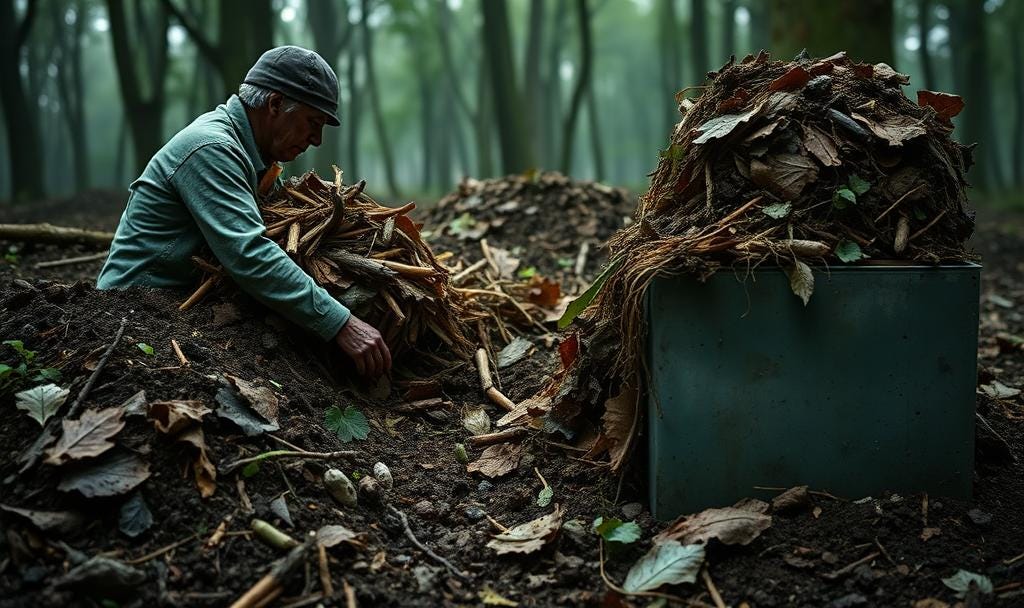
New Jersey just legalized human composting, charging $7,000 to turn deceased relatives into soil. They're marketing this as environmentally conscious death care.
Nobody's discussing what's actually in modern human bodies.
The Contamination Reality
Research reveals disturbing levels of synthetic materials accumulating in human tissue. University of New Mexico researchers found microplastics in human brains at concentrations 50% higher than just years earlier, with brain tissues harboring higher plastic concentrations than other organs.
Studies show the highest microplastic abundance in lung tissue (14.19 particles per gram), followed by intestines and tonsils. These particles have been detected in blood, semen, breast milk, and liver tissue, demonstrating bioaccumulation across organ systems.
Estimates suggest people consume tens of thousands of microplastic particles annually.
The Pharmaceutical Problem
Modern humans are walking pharmaceutical repositories. Medications aren't entirely absorbed; significant portions are excreted into wastewater and accumulate in body tissues.
Research on composting pharmaceutical-contaminated materials shows medications and hormones are "far more difficult to eliminate," with growth hormone residues being particularly persistent.
While composting can reduce some pharmaceutical residues compared to raw sewage sludge, complete elimination isn't guaranteed.
The Historical Context
Before industrial society, human decomposition was straightforward: bodies contained carbon, nitrogen, phosphorus, and trace minerals. Natural decomposition recycled these elements efficiently.
Modern bodies contain synthetic polymers, pharmaceutical residues, industrial chemicals, preservatives, and compounds that didn't exist in nature until humans created them.
We've essentially turned human corpses into hazardous waste, then decided to compost the hazardous waste.
The Composting Reality Check
The human composting industry claims their process eliminates pathogens and toxins through sustained heat. Companies like Recompose state that their process "eliminates disease pathogens and parasites" through temperature control.
But pathogen elimination differs from synthetic material breakdown. Microplastics don't decompose under composting temperatures. Persistent pharmaceutical compounds may survive processing. Industrial chemicals accumulate rather than disappear.
The $7,000 premium isn't buying decomposition enhancement—it's buying contaminated soil with regulatory approval.
The Regulatory Gap
Environmental agencies regulate pharmaceutical disposal and plastic contamination separately, but human composting combines both challenges into soil intended for beneficial use.
Current water treatment doesn't completely remove pharmaceutical residues from wastewater systems. If municipal treatment plants can't eliminate these compounds, can composting facilities?
The regulations address pathogen control and processing standards, but don't specifically address synthetic material persistence or pharmaceutical breakdown rates.
The Unasked Questions
What happens when composted human remains contain microplastics that don't degrade? Where do persistent pharmaceutical compounds end up in the final soil product?
If we're concerned about pharmaceutical contamination in water supplies and agricultural systems, why are we less concerned about concentrating these compounds in human composting operations?
The environmental benefit calculations assume human bodies are equivalent to pre-industrial biomass. This assumption may be decades out of date.
The Market Reality
The human composting industry is selling a solution to cemetery overcrowding and environmental impact, but may be creating new contamination pathways for synthetic materials that accumulate in human tissue.
Traditional burial contains contamination in designated cemetery areas. Cremation destroys most organic compounds through high-temperature incineration. Human composting creates soil intended for beneficial use while potentially preserving synthetic contaminants.
The Existential Punchline
We've created a society where we literally become toxic waste when we die.
Think about that. We've manufactured materials that accumulate in our tissues, developed pharmaceuticals that persist in our bodies, and consumed microplastics that lodge in our organs. Then we die and wonder why decomposition has gotten complicated.
We're paying $7,000 to compost contaminated biomass while calling it "returning to nature." Nature never included synthetic polymers and pharmaceutical cocktails.
Have We Lost the Plot?
Previous generations worried about their souls. We've managed to contaminate our actual corpses.
Every creature on Earth decomposes cleanly except humans, who've turned themselves into biohazardous material requiring specialized processing facilities and regulatory approval.
We've solved the wrong problem. Instead of figuring out how to safely compost contaminated humans, maybe we should ask why humans became contaminated in the first place.
But that would require admitting we've fundamentally broken something that worked perfectly for billions of years.
Well, isn't that special?
Are we the first species to require industrial processing to decompose safely? The comment section awaits your thoughts on humanity's toxic legacy.
//Peace
Microplastics have been found in a number of different species. The same is true of pharmaceuticals (particularly growth hormones, as you point out). It's not only ourselves that we're contaminating. And we have no current methods for remediating microplastics in the environment.
I'll stick with cremation. Set the controls for the heart of the sun!