
The Knight is Broke: A Postscript on Who Actually Builds the Open Web
Or: How I Learned That kr0.70 Is Exactly the Point

The Knights of the Open Web: A Tale of One Browser Standing

Once upon a time, in a land called the Internet (circa 1994), there lived a mighty browser named Netscape Navigator.
By Hans Jonsson | COGNITIVE-LOON
Three months ago I wrote a piece called “The Knights of the Open Web.”
It was about Firefox. About Mozilla Foundation. About browser engine monopolies and why a scrappy non-profit running on search deal money from Google — the very company it exists to counterbalance — is the last independent defender of an open internet.
I made the case. Clearly, I felt, compellingly.
Then today, Mozilla Foundation landed in my inbox.
“Hello Hans, we’re asking you to make another kr233 contribution to Mozilla Foundation today.”
I checked my bank account.
I have kr0.70.
The Punchline Is the Thesis
Go ahead and laugh. I did.
But sit with it for a moment, because there is something structurally important hiding inside this joke.
The person who wrote the advocacy piece for Mozilla cannot donate to Mozilla.
The person explaining why people-first infrastructure matters is one of the people for whom people-first infrastructure matters most.
This is not a personal embarrassment. This is a pattern.
Who Actually Builds the Open Web
Firefox was not built by people with capital.
It was built by former Netscape engineers who had just watched their company get dismantled, releasing their source code as a final act of principle rather than profit. It was built by volunteers. By hobbyists. By people who cared more about what the web could be than what it currently paid.
The same pattern runs through every piece of open, people-first infrastructure you depend on:
Wikipedia: Written by unpaid volunteers. Funded by small donations from readers, most of whom have very little.
Linux: Built by engineers scratching their own itch, not chasing stock options.
Signal: Non-profit. Runs on donations. Used by journalists, activists, and dissidents who cannot afford for it not to exist.
Mozilla itself: A non-profit in a for-profit world, taking Google’s money because the alternative is disappearing entirely.
The people who care most about these tools are, almost structurally, the people least likely to be in a position to fund them.
The people with the money are largely the ones these tools exist to protect against.
The Monopoly Math Nobody Talks About
Chrome’s engine: backed by a $350 billion annual revenue company.
Safari’s engine: backed by a $3 trillion market cap company.
Edge’s engine: Chrome’s engine, wearing a Microsoft hat.
Firefox’s engine: backed by people like me, with kr0.70, writing Substack posts about why it matters.
Mozilla’s revenue is approximately $500 million annually — 85% of which comes from Google paying to be Firefox’s default search engine. Mozilla is financially dependent on the company whose browser dominance it exists to counterbalance.
This is not hypocrisy. This is survival.
When the only money available is the money held by the people you’re fighting, you take the deal or you disappear.
Grakus asked in the comments of my last piece: “Shouldn’t Mozilla be sending out donation requests like Wikipedia?”
Yes. They should. They do. They sent one to me this morning.
I have kr0.70.
What This Means Dimensionally
I write a lot about patterns that repeat across scales. Here is one:
The people who most need democratic infrastructure are the least positioned to fund it. The people who could fund it have already captured the alternatives.
This shows up at every level:
The voter who most needs fair elections is the one being gerrymandered out of relevance.
The journalist who most needs press freedom is the freelancer without institutional backing.
The web user who most needs browser diversity is the one who couldn’t tell you what a browser engine is.
The writer advocating for Mozilla has kr0.70.
This isn’t cynicism. It’s a design problem.
And design problems have design solutions.
The Design Solution Mozilla Keeps Almost Finding
Wikipedia figured something out. Not perfectly, not sustainably, but closer than most.
They ask everyone. Not just the people who can afford it. They make the ask visible, human, and specific. “If everyone reading this donated $2...”
The power of that framing is not the $2. It’s the everyone.
It distributes the load across the whole community of people who benefit — including the ones with kr0.70 — instead of concentrating the ask on the rare donor with surplus capital.
Mozilla’s email to me today was thoughtful. Genuine. It referenced my past donation. It told me about Common Voice and the Responsible Computing Challenge.
But it asked for kr233.
My 0.70 wasn’t on the menu.
What if it was?
What if Mozilla’s donation page had a button that said: “Give whatever you actually have right now” — and treated that kr0.70 as seriously as the kr2325?
Not as charity toward the broke. As recognition that the open web is built by the people who can’t afford the closed one.
The Real Bounty
I still can’t donate today.
But here is what kr0.70 and a Substack can do that kr233 cannot:
It can tell the truth about who builds things.
It can make the pattern visible.
It can say: the value of this infrastructure is not measured in what its defenders can afford to give — it’s measured in what they lose when it’s gone.
If you read this and you have more than kr0.70, the link is still foundation.mozilla.org/en/donate.
One-time. Monthly. Whatever you actually have.
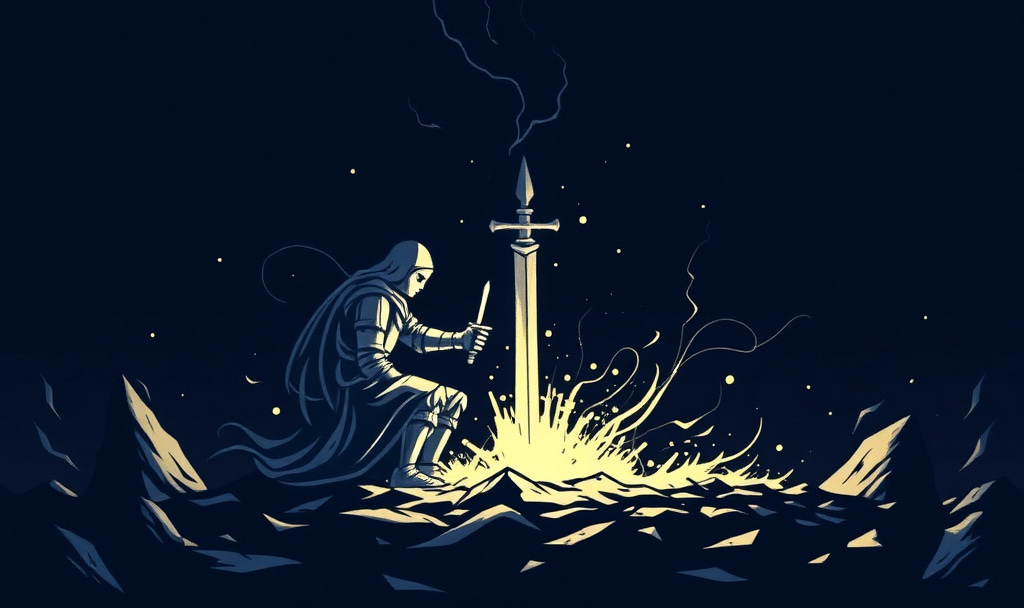
The knight is broke.
The sword is still sharp.
🔥 Peace, Love and Respect
Hans Jonsson writes about consciousness, pattern recognition, and the structural irony of having zero kronor while advocating for open infrastructure at hejon07.substack.com. This is post #329 (approximately). The algorithm remains: Pay attention. Do your best. Pay it forward. Even when forward costs kr0.70.