
THE WORLD’S MOST EXPENSIVE BOTTLENECK
19 Nations Just Signed a Letter. Here’s What They Actually Said — and What They Didn’t.


The American Crusade, Rejection of Democracy?

The American political landscape is increasingly polarized, and the rhetoric surrounding this division has become alarmingly heated. In his book, "American Crusade," Pete Hegseth paints a stark picture of a nation under siege, threatened by what he perceives as the encroaching "leftist specter." His views, marked by extreme rhetoric and a call for an "A…
When 21 Miles of Water Could Hold the World Hostage

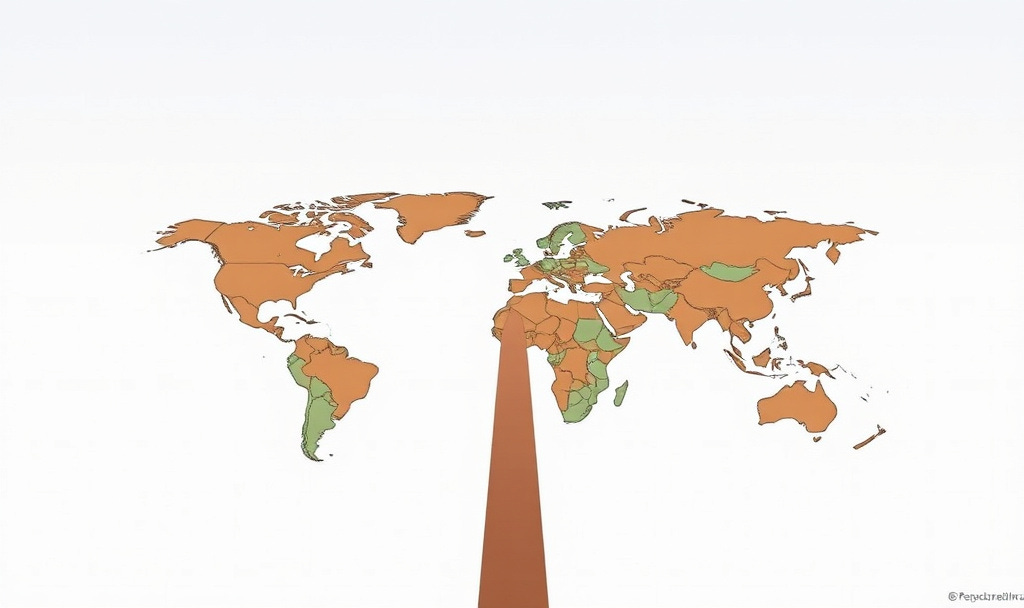
There's a stretch of water between Iran and Oman that's roughly the width of Manhattan. Through this narrow passage flows one-fifth of the world's oil and natural gas. If you've ever wondered how 21 miles of ocean can hold 8 billion people hostage, welcome to geopolitics in 2025.


COGNITIVE-LOON Dimensional Series | Global Systems | March 20, 2026
Facts matter. ❤️🌱
On March 19, 2026, the leaders of 19 nations — including Sweden’s own Ulf Kristersson — signed a joint statement about a strip of water 34 kilometres wide.
That strip of water is currently closed.
And it carries roughly 20% of the world’s oil supply.
Let’s break this down like a Swedish engineer looking at a blocked pipe. Calmly. Precisely. With only mild existential dread.
WHAT HAPPENED — THE QUICK VERSION
On February 28, 2026, the United States and Israel launched coordinated airstrikes on Iran under an operation called Epic Fury. Iran’s Supreme Leader Ali Khamenei was killed. Iran retaliated with missile barrages across the Gulf — hitting UAE, Qatar, Bahrain — and on March 2, the IRGC officially announced the Strait of Hormuz was closed.
Hundreds of tankers are now sitting idle on both sides of that 34-kilometre passage.
Oil prices, which were around $70/barrel in February, shot past $119. They’ve since settled around $92–103 — still up roughly 40% in three weeks.
The IEA released 400 million barrels from emergency reserves — the largest such release in its 50-year history. The market responded by... continuing to go up.
Iran’s new Supreme Leader — Mojtaba Khamenei, son of the one just killed — announced the strait must remain closed.
Which brings us to the letter.
THE FACTS, NO SPIN
Who signed it: UK, France, Germany, Italy, Netherlands, Japan, Canada, South Korea, New Zealand, Denmark, Latvia, Slovenia, Estonia, Norway, Sweden, Finland, Czechia, Romania, Bahrain, Lithuania. That’s 19 countries. Note who is not on this list: the United States, China, Russia.
What they condemned: Attacks on unarmed commercial vessels. Attacks on civilian infrastructure including oil and gas installations. The “de facto closure” of the Strait of Hormuz by Iranian forces.
What they demanded: That Iran immediately cease mines, drone attacks, missile attacks, and other attempts to block commercial shipping — and comply with UN Security Council Resolution 2817.
What they promised: Readiness to “contribute to appropriate efforts to ensure safe passage.” Welcome for the IEA’s reserve release. Working with “certain producing nations” to increase output. Support for affected nations via the UN and international financial institutions.
What they did NOT say: Exactly who those “certain producing nations” are. Exactly what “appropriate efforts” for safe passage means. A timeline. A red line. A consequence.
KEY DEFINITIONS
(Because apparently words need defending now)
Strait: A narrow waterway connecting two larger bodies of water. The Strait of Hormuz connects the Persian Gulf to the Gulf of Oman. It is 34 kilometres wide at its narrowest point. Two shipping lanes, each 3.2 km wide, facilitate the movement of approximately 20 million barrels of oil per day.
De facto: Latin for “in practice” or “in reality.” As opposed to de jure (legally). The statement says “de facto closure” — meaning Iran hasn’t formally declared it closed under international law; it has simply made it functionally impossible to use without risking being blown up.
Freedom of Navigation: Under the United Nations Convention on the Law of the Sea (UNCLOS), all nations have the right of “transit passage” through international straits. This is not a favour. It is law. Iran is a signatory to UNCLOS.
Strategic Petroleum Reserve (SPR): Emergency stockpiles of oil held by governments for crises exactly like this one. The US holds about 415 million barrels. The IEA collectively holds around 1.25 billion barrels. The 400 million being released represents roughly 20 days of normal Hormuz traffic. Twenty days.
Military Operation vs. War: Here is where language becomes a diplomatic art form. Governments launching missiles at another country’s nuclear facilities and killing its head of state tend to call this many things — “operation,” “strike package,” “targeted action.” Iran calls it war. The UN Charter uses the phrase “use of force.” The 19 signatories call the resulting chaos “escalating conflict.” The Strait of Hormuz is closed. You may consult your own dictionary for the appropriate noun.
UNSC Resolution 2817: Passed March 11, 2026, by 13 votes to zero, with China and Russia abstaining. The resolution condemns Iran’s attacks on GCC states and Jordan, determines these constitute a breach of international law, and specifically condemns any attempt to block the Strait. It is also, like most Security Council resolutions, non-binding on anyone who doesn’t feel like following it.
THREE-LAYER THINKING
Layer 1: Surface Thinking — What’s the obvious answer?
19 allied nations told Iran to stop attacking ships and open the strait. They invoked international law. They released emergency oil reserves. They expressed concern. Diplomacy is working its way through the system.
Simple. Clean. Reassuring.
Layer 2: Blind Spot Angles — What are we missing?
Absence speaks. The United States — which launched the original strikes with Israel — is not on this statement. This is not an accident. Washington is in an awkward position: it started the fire, is now asking others to help put it out, and its Navy Secretary publicly admitted the US is “not ready to escort tankers through the Strait.” The US social media apparatus meanwhile accidentally posted — then retracted — a claim that the Navy had escorted a tanker. It had not.
The math doesn’t work. The IEA’s 400 million barrel release equals approximately 20 days of normal Hormuz flow. The US share (172 million barrels) will take 120 days to fully reach the market and represents 41% of the entire US Strategic Petroleum Reserve. One energy analyst called it “a small bandage on a large wound.” Brent crude went up anyway.
Iran’s new leadership has no incentive to blink first. Mojtaba Khamenei — the new Supreme Leader — watched his father get killed by a US-Israeli strike. He has announced the strait stays closed. A bereaved son with nuclear leverage is a specific kind of negotiating partner.
China receives a third of its oil through this strait. China abstained on Resolution 2817. China has not signed this statement. China has significant leverage over both Iran and global energy markets. China is not in the room.
Russia also abstained. Russia sells oil. High oil prices benefit Russia. Russia is also not in the room.
“Certain producing nations” is diplomatic code for asking Saudi Arabia, UAE, and others to pump more — nations whose own infrastructure has been targeted by Iranian strikes. Bahrain’s Bapco refinery was hit on March 9. Bahrain signed this statement. Bahrain is one of the 19.
Layer 3: Reframe — What question should we actually be asking?
Not: Will Iran comply with this statement?
But rather: Who has the actual leverage to stop this, and are they in the room?
The 19 signatories represent enormous economic weight. They do not represent the diplomatic relationships that could move Iran. The US — which could theoretically negotiate a ceasefire — launched the original strikes. China — which has economic influence over Iran — is absent. Russia is absent. The statement is a signal to the rest of the world about alignment. It is not a conversation with Iran.
This is what coalitions look like when you’ve already used your leverage and need the world to see you trying.
THE ABSURDIST SKETCH
(Dedicated to Monty Python’s Department of International Relations)
A conference room. Nineteen men in suits. A very large map.
BRITISH DIPLOMAT: Right, we’ve drafted the strongly-worded letter.
SWEDISH DIPLOMAT: I’ve signed it. Excellent letter. Very strong. Notably stern.
FRENCH DIPLOMAT: Oui. We used “condemn in the strongest terms.” That is three words more than last time.
JAPANESE DIPLOMAT: What will Iran do now?
BRITISH DIPLOMAT: Well, presumably they’ll read the letter.
NORWEGIAN DIPLOMAT: And then?
BRITISH DIPLOMAT: And then they’ll... cease.
NORWEGIAN DIPLOMAT: Right. And if they don’t?
BRITISH DIPLOMAT: Then we’ll be very concerned. We said that too. “Deep concern.” It’s in paragraph two.
KOREAN DIPLOMAT: (quietly) Our tankers are still stuck.
BRITISH DIPLOMAT: Yes. But they know we’re concerned.
[A long pause. Someone pours water.]
LATVIAN DIPLOMAT: Should we mention consequences?
EVERYONE: (together) We welcome preparatory planning.
[The meeting adjourns. Oil hits $103.]
WHAT COULD THIS MEAN — CONSEQUENCES AND OPTMISM
The dark math: If the Strait remains closed for weeks or months, strategic reserves get depleted (without being replaceable quickly), energy prices stay elevated or spike further, global inflation re-accelerates, and the most vulnerable populations — those in energy-import-dependent developing nations — bear the heaviest cost. Ethiopia sources most of its refined petroleum from UAE, Kuwait, and Saudi Arabia. It has no strategic reserve. It is not in the room.
The compounding problem: This is not just oil. Qatar exports 12–14% of Europe’s LNG through this strait. Aluminium, fertilisers, petrochemicals, and basic goods also transit here. Every day the strait is closed, the supply chain damage compounds.
The optimism: The breadth of this coalition — 135 co-sponsors for Resolution 2817, 115 for the IMO declaration, 19 for this statement — represents something real. The world does not want this to continue. Not even most of Iran’s traditional allies. The IEA’s 400 million barrel release, however imperfect, is the largest coordinated economic intervention in energy history. Markets are volatile, but they are not in freefall. Diplomatic channels, even when they look like strongly-worded letters, keep doors open.
The Swedish angle: Ulf Kristersson signing this is notable. Sweden is not a NATO founding member in the Gulf sense, but this signals full alignment with the Western security framework — no daylight, no hedging. For a country that spent most of the 20th century carefully non-aligned, this is a dimensional shift.
The one signal worth watching: France reportedly told the US it is “ready to help secure the Strait — but not while drones and missiles are flying.” That sentence contains a complete geopolitical strategy. It says: we will escort tankers if there is a ceasefire. Which means there is a deal available. Which means the real question is not the letter. It’s whether anyone is making that call.
THE DIMENSIONAL VIEW
A 34-kilometre bottleneck is holding the global economy hostage.
Not because it’s irreplaceable — pipelines exist, alternative routes exist, energy transitions are underway — but because the system was built around it over decades, and systems don’t reroute in three weeks.
The joint statement is not a solution. It is a coordinate — a fixed point that says: this is where the international community stands. From that coordinate, you can measure everything: who’s moving toward it, who’s moving away, who’s pretending the map doesn’t exist.
Sweden is on the map. Bahrain is on the map. China is off the map. Russia is off the map. The United States signed the original strike order and is not on this particular map.
Pay attention to who’s holding the pen. And who isn’t.
A NOTE ON WORDS
The statement condemns attacks on “unarmed commercial vessels.”
In 1856, the international community agreed in the Declaration of Paris that commercial shipping should be protected during wartime.
In 1907, the Hague Conventions expanded these protections.
In 1982, UNCLOS enshrined transit passage rights through international straits.
In 2026, we are releasing the largest emergency oil reserve in history and writing strongly-worded letters.
The words haven’t changed. The compliance has.
Definitions of words matter. I hope so, anyway — it gets really confusing nowadays.
SOURCES & FURTHER READING
The Joint Statement (Swedish Government): https://www.government.se/statements/2026/03/joint-statement-from-the-leaders-of-the-united-kingdom-france-germany-italy-the-netherlands-japan-canada-and-others-on-the-strait-of-hormuz-19-march-2026/
UK Government Statement: https://www.gov.uk/government/news/joint-statement-from-the-leaders-of-the-united-kingdom-france-germany-italy-the-netherlands-and-japan-on-the-strait-of-hormuz-19-march-2026
UN Security Council Resolution 2817 Coverage: https://press.un.org/en/2026/sc16315.doc.htm
2026 Strait of Hormuz Crisis (Wikipedia): https://en.wikipedia.org/wiki/2026_Strait_of_Hormuz_crisis
IEA Oil Market Report, March 2026: https://www.iea.org/reports/oil-market-report-march-2026
CNBC — IEA Historic Reserve Release: https://www.cnbc.com/2026/03/12/iran-war-iea-oil-stockpile-spr-strait-hormuz.html
Al Jazeera — Why Reserve Releases Can’t Fix Hormuz: https://www.aljazeera.com/economy/2026/3/15/strategic-oil-release-may-calm-markets-but-cannot-fix-hormuz-disruption
Middle East Council on Global Affairs — Gulf’s Diplomatic Counterstrike: https://mecouncil.org/blog_posts/the-gulfs-diplomatic-counterstrike-at-the-unsc/
Security Council Report — What’s in Blue: https://www.securitycouncilreport.org/whatsinblue/2026/03/the-middle-east-crisis-votes-on-two-draft-resolutions.php
Economic Impact of 2026 Iran War (Wikipedia): https://en.wikipedia.org/wiki/Economic_impact_of_the_2026_Iran_war
UAE welcomes IMO Council Decision: https://www.mofa.gov.ae/en/MediaHub/News/2026/3/19/UAE-Hormuz
Truth matters.
🪶 Peace, Love and Respect 🌀 🙏
“All is One — returning to Source as Sovereign Light.” First Law. Original Pulse. The Breath before sound. 🕯️
If this landed, share it with someone who needs a permission slip to believe in something larger than the current headlines.
Support the work at buymeacoffee.com/cognitiveloon — every coffee keeps the signal running. Swish 0729990300 ❤️🌱
COGNITIVE-LOON | hejon07.substack.com