
When Infrastructure Meets Reality:The January 2026 Winter Storm
What You Can Do: Practical Survival Guide

🪶This post is long because survival requires information.🙏
The Facts, No Spin
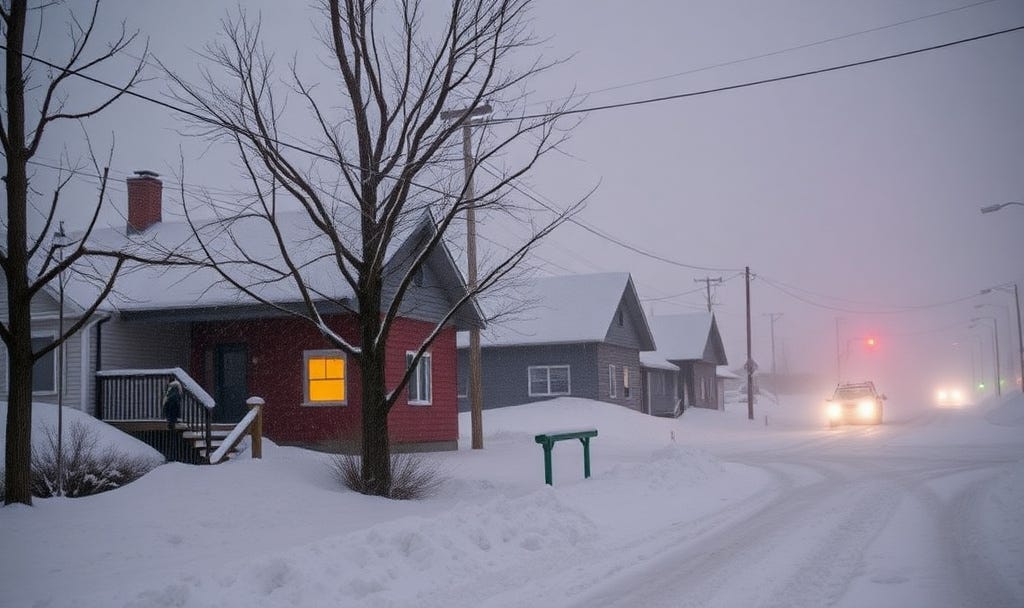
Over 235 million Americans across 40+ states are in the path of what meteorologists are calling potentially the most significant widespread winter storm in years. This is not hyperbole. This is what’s actually happening right now, Friday, January 23, 2026:
The Numbers:
205 million people under winter weather alerts
2,000-mile storm corridor from Texas to Maine
Ice accumulation forecast: up to 3 inches in the Texas-Louisiana corridor
Snow totals: 12-24 inches in some areas from Southern Plains to Northeast
Temperature forecast: -20°F to -30°F upper Midwest, near zero across Mid-Atlantic
Wind chills: Below -50°F in parts of Minnesota and North Dakota
10 states have declared emergencies: Alabama, Arkansas, Georgia, Louisiana, Mississippi, Missouri, North Carolina, South Carolina, Tennessee, Virginia
Texas disaster declaration: 134 counties
Flights canceled as of Thursday evening: Nearly 1,300 (thousands more expected)
The Context That Matters: In February 2021, Winter Storm Uri killed 246 people in Texas according to official state records (some analyses suggest 700+). The storm left 4.5 million homes without power, some for days. Economic losses: $80-130 billion. Average power outage duration: 42 consecutive hours. This happened because critical infrastructure—power plants, natural gas systems, water systems—was not winterized for extreme cold.
Since 2021, Texas has added 17,000 megawatts of battery storage and implemented winterization requirements. Whether this is sufficient is about to be tested. Other states in the storm’s path have less experience with extreme winter conditions and correspondingly less robust cold-weather infrastructure.
Layer 1: What’s the Obvious Answer?
Surface thinking: It’s a bad storm. Stay inside. Buy supplies.
The obvious answer is correct but incomplete. This storm spans half the country simultaneously. It’s not one regional emergency moving through—it’s a systemic stress test of interconnected infrastructure across 30+ states happening all at once.
The immediate concerns are:
Heavy snow and ice making travel impossible
Extreme cold straining electrical grids
Power outages from ice-laden power lines
Frozen natural gas production and delivery systems
Water system failures in southern states
Emergency services unable to reach people
The standard advice applies: food, water, blankets, stay home. But that advice assumes you’ll have shelter, that help will arrive, that your house will maintain its structural integrity. The 2021 experience showed these aren’t safe assumptions.
Layer 2: What Am I Missing?
Blind spot angles: The cascading failures nobody talks about
The Grid Fragility Nobody Wants to Admit:
America’s electrical grid was designed for a country that no longer exists. Much of the infrastructure dates to the 1950s-1970s. We’ve added 50+ million people without proportional infrastructure upgrades. The grid handles summer air conditioning peaks reasonably well because that’s what it was designed for. Winter heating peaks—especially simultaneous peaks across multiple regions—expose the fundamental weakness: the system operates with minimal margin for error.
When temperatures hit -20°F to -30°F in the upper Midwest while simultaneously dropping below freezing deep into Texas, every electric heating system, space heater, and backup heat source turns on. Peak demand doesn’t just increase—it spikes to historic levels. The grid isn’t built for this.
In 2021, the critical failure wasn’t just frozen equipment. It was the assumption that certain components would never need to operate in certain conditions. Natural gas wells in Texas and Oklahoma froze because they weren’t insulated for extended sub-freezing temperatures. Why would they be? It rarely gets that cold there. Except when it does.
The Compounding Problem:
Ice storms don’t just knock out power. Three inches of ice means:
Power lines snap under the weight
Transmission towers collapse
Tree branches loaded with ice fall on distribution lines
Road access for repair crews becomes impossible
Emergency services can’t reach the injured
Hospitals lose grid power and rely on generators (which need fuel deliveries that can’t arrive)
The 2021 Federal Energy Regulatory Commission report found that protecting just four types of power plant components from icing and freezing could have reduced outages by 67% in the ERCOT region. Five years later, we’re about to find out if those protections were actually implemented—and whether they extend to the other 35+ states in this storm’s path.
The Southern States Problem:
Electrical heating is the dominant heat source in Alabama, Arkansas, Georgia, Kentucky, Louisiana, Mississippi, North Carolina, South Carolina, Tennessee, Texas, and Virginia. When the power goes out in these states during extreme cold, homes don’t just get uncomfortable—they become dangerously cold. Fast.
Houses in the South are built for heat management, not cold retention. They have excellent attic ventilation (to reduce summer heat), minimal insulation by northern standards, and often use heat pumps that become inefficient or non-functional below certain temperatures. Many backup heating systems are electric resistance heaters—the most electricity-intensive option.
When 70% of Texans lost power in 2021, indoor temperatures dropped to at or below freezing. People died of hypothermia inside their homes.
The Water System Cascade:
Water treatment facilities need electricity. Pumping stations need electricity. When power fails, water systems fail. When temperatures are below freezing and water systems fail, pipes freeze and burst. When pipes burst throughout an entire region simultaneously, there aren’t enough repair crews, supplies, or accessible roads to fix the problem quickly.
In 2021, 49% of Texans lost running water. Average disruption: 52 hours. Boil-water advisories were issued across multiple states. People couldn’t flush toilets, cook, or clean. Hospitals couldn’t maintain sanitation standards.
The Invisible Killer: Carbon Monoxide:
In 2021, at least 300 people suffered carbon monoxide poisoning in Texas. When people are cold, desperate, and without power, they make dangerous decisions: running cars in garages for heat, using gas stoves for warmth, operating generators indoors. Carbon monoxide is odorless. It’s invisible. By the time you realize something is wrong, cognitive function is already impaired.
Layer 3: What Question Should I Actually Be Asking?
Reframe: This isn’t about weather—it’s about whether we can maintain civilization with 1950s infrastructure under 2026 stresses.
The real question isn’t “How do I survive this storm?”
The real questions are:
1. Why does maintaining basic human needs—heat, water, food, shelter—require individual preparation for systems that should be robust?
We’ve organized society around the assumption that infrastructure just works. The grid delivers power. Water comes from taps. Roads get cleared. Emergency services arrive. These aren’t luxuries—they’re the baseline assumptions that make modern life possible.
When that baseline fails across 30+ states simultaneously for multiple days, we’re not dealing with a weather event. We’re dealing with systemic infrastructure failure that exposes how fragile our baseline really is.
2. What happens to complex societies when multiple critical systems fail at once?
The 2021 storm showed us: about 1.4 hours after the grid begins failing, people start experiencing indoor hypothermia. About 24 hours in, water systems fail. About 48 hours in, hospitals start rationing resources. About 72 hours in, fuel deliveries can’t reach gas stations. About 96 hours in, food supplies at stores are depleted.
These cascades happen because everything connects to everything else. The trucks that deliver fuel need passable roads. The repair crews need fuel. The hospitals need water. The water plants need electricity. The electricity plants need natural gas. The natural gas wells need electricity to operate.
3. If this is “historic” and “unprecedented,” why does it keep happening?
Texas had major winter failures in 1989, 2011, and 2021. Each time, reports were written. Recommendations were made. Improvements were promised. Then we wait until the next “unprecedented” event to do it again.
The pattern isn’t weather. The pattern is treating systemic infrastructure problems as temporary emergencies rather than permanent vulnerabilities that require permanent solutions.
This storm will end. People will recover. Eventually. The real question is: will we build systems that don’t require individual heroic efforts to maintain basic survival during predictable extreme weather? Or will we continue to treat infrastructure as someone else’s problem until it becomes everyone’s emergency?
What You Can Do: Practical Survival Guide
The Swedish engineer who was my father had a rule in the petrochemical plant: zero margin for error. Not because he was paranoid, but because the consequences of failure were catastrophic. The same principle applies now.
IMMEDIATE ACTIONS (Do This Today)
Water: THE Absolute Essential
Water is more critical than food, more critical than warmth. Your body can survive weeks without food. It survives days without water. In extreme cold, dehydration kills faster because cold air is dry air, and you lose moisture with every breath. Your body also works harder to maintain core temperature, increasing water needs.
How much: 1 gallon per person per day, minimum 7 days Where to store it: Bathtubs (clean first, fill completely), every large container you own, unused trash cans lined with clean bags Cost: Essentially free if you use tap water. Bottled: ~$8 for 24 bottles (3 gallons) WHY THIS MATTERS: In 2021, 49% of Texans lost running water. That means no drinking water, no toilet flushing, no washing, no cooking. Most didn’t die of cold—they got dangerously close to dying of dehydration and unsanitary conditions.
If water systems fail:
Your bathtub becomes your reservoir
Snow is NOT clean water (atmospheric pollution, roof contamination)
Ice from freezer can be melted (use body heat if power is out—put containers inside clothing)
Yellow snow rule: if you wouldn’t drink it, don’t use it for cooking
Food: Calories Are Survival Currency
The Arctic Survival Math:
Fat: 9 calories per gram
Protein: 4 calories per gram
Carbohydrates: 4 calories per gram
When you’re cold, your body burns calories maintaining core temperature. This is not theoretical—this is why Arctic survival focuses on high-fat diets. Fat provides more than twice the energy per gram.
What to buy: (All available at Target, Walmart, grocery stores)
High-Priority Items:
Peanut butter (180 calories per 2 tablespoons, mostly fat): ~$3-4 for 16 oz jar
Nuts (almonds, peanuts, mixed): ~$8-10 per pound, 160-200 calories per ounce
Beef jerky/dried meat: ~$8-12 per bag
Granola/protein bars: ~$8-12 per box
Canned beans: ~$1-2 per can, 400+ calories, protein
Canned tuna/chicken: ~$2-4 per can
Crackers: ~$3-5 per box
Dried fruit: ~$5-8 per bag
Instant coffee/tea: mental health matters in crisis
Chocolate: seriously, morale is survival
Total cost for 1 person, 7 days: ~$60-100 depending on choices
Important: Get food that requires NO cooking if power fails. A can of beans you can’t open or heat is worthless.
What you need:
Manual can opener ($3-5)
Eating utensils that don’t require washing (paper/plastic)
Garbage bags (sanitation matters)
Warmth: The Layers Between You and Hypothermia
Body Insulation—Cheaper Than You Think:
Your body generates heat. The goal is keeping that heat close to your body. This is basic physics: trapped air insulates. Movement breaks insulation. Wet destroys insulation.
Clothing Layers (per person):
Thermal underwear (top and bottom): ~$15-25 at Walmart/Target
Wool socks (pack of 4): ~$12-20
Hat that covers ears: ~$5-10 (you lose 40%+ of body heat through your head)
Gloves: ~$8-15
Multiple layers of regular clothing: raid your closet
Cost per person: ~$50-70 for basics
The Blanket Strategy:
Every blanket in your house becomes critical. But there’s a hierarchy:
Mylar emergency blankets ($1-2 each, sold in packs): Reflect up to 90% of body heat. Not comfortable, but incredibly effective. Buy 5-10 per person. Use as innermost layer against body, then regular blankets over top.
Sleeping bags (if you have them): Much more efficient than blankets. If you don’t have them and have money: ~$30-50 for a 20°F rated bag.
Regular blankets: Layer them. More thin layers > one thick layer (traps more air).
Critical technique—The Huddle: If power fails and temperatures drop, everyone in household sleeps in one room, preferably smallest room that can fit everyone. Close doors to other rooms. Hang blankets over windows and doorways. Shared body heat in small space = survival.
Window Insulation: The $20 Investment That Saves Lives
The Physics:
Standard 2-pane windows have a K-value (thermal conductivity) of about 2.8 W/m²·°C. A wall with 300mm of insulation: 0.13 W/m²·°C. Windows are bleeding heat 20x faster than your walls. They’re only 10% of your surface area, but they’re your biggest heat loss points.
Solutions:
Option 1: Plastic Window Insulation Film Kit
Cost: ~$12-20 per kit at Home Depot/Lowe’s (covers 5-6 windows)
How it works: Creates dead air space between plastic and window, reduces thermal transfer by 30-40%
Installation: 15 minutes per window with hair dryer
Value: One kit saves ~$50-100 in heating costs over winter, could save your life in power outage
Option 2: Heavy blankets/curtains over windows
Cost: Use what you have, or ~$20-40 per window for thermal curtains
How it works: Blocks both heat radiation and thermal transfer
Bonus: In daytime with sun, open south-facing windows to gain solar heat, close at night
Option 3: Bubble wrap (seriously)
Cost: ~$20 for large roll
How it works: Cut to size, spray window with water, apply bubble side to glass, seals with water tension
Effect: Reduces heat loss by 50%, still lets light through
Removes easily when storm passes
The Room Consolidation Strategy:
When power fails:
Pick smallest room that fits everyone
Insulate ALL windows in that room
Close/block all vents and doors to rest of house
Hang blankets over doorways
Everyone sleeps in that room
One candle in safe holder provides light and 75-100 watts of heat
Cost to insulate one critical room: ~$30-50 Cost of not doing it: Potentially fatal hypothermia
Light and Communication: $30 for Peace of Mind
What you actually need:
Flashlights with extra batteries: ~$15-25
Get LED flashlights (batteries last 10x longer)
Headlamps are better than handheld (hands free)
Buy more batteries than you think you need
Hand-crank/solar emergency radio: ~$25-40
Receives NOAA weather alerts
Charges your phone (slowly)
Operates without batteries
AM/FM keeps you informed and sane
Candles (optional, careful): ~$5-10
Only use in attended rooms
One candle = 75-100 watts heat output
More useful for morale than practical lighting
Important: Your phone will die. A hand-crank radio means you’re never completely cut off from information.
The Medicine Cabinet Check
Do this right now:
List all prescription medications
Calculate if you have 30-day supply
If not, call doctor TODAY for emergency refill
Put list of medications, dosages, and doctor contacts in waterproof bag
Basic first aid additions:
Pain reliever (ibuprofen/acetaminophen): ~$8
Bandages and antiseptic: ~$10
Thermometer: ~$10 (hypothermia detection)
Any personal medical equipment needs backup power or manual alternative
Carbon Monoxide: The Invisible Killer
THE RULES (no exceptions):
NEVER run vehicles in garage, even with door open
NEVER use gas stove/oven for heat
NEVER run generator indoors or in garage
NEVER use charcoal grill indoors
What you need:
Battery-operated CO detector: ~$20-30
Test it NOW
Place near sleeping areas
In 2021: 300+ people suffered CO poisoning trying to stay warm. Some died. Don’t become a statistic.
If You Have a Car
The $40 Kit That Saves Lives:
Keep in trunk:
Blanket or sleeping bag (~$15-25)
Flashlight with extra batteries (~$10)
Bottled water (~$5)
Granola bars/nuts (~$8)
Shovel (collapsible: ~$15-20)
Ice scraper (~$5)
Jumper cables (~$20)
First aid kit (~$15)
Flares or reflective triangles (~$10)
Total: ~$100-150
If you get stranded:
Stay with vehicle
Run engine 10 minutes per hour for heat (keep exhaust clear)
Tie bright cloth to antenna
Don’t leave to walk for help (people die doing this)
The Budget Reality Check
Absolute minimum survival (1 person, 1 week):
Water: $8 (3 gallons bottled) + free tap water
Food: $60-80
Thermal underwear/socks: $30
Mylar blankets: $10
Window insulation kit: $15
Flashlight and batteries: $15
Manual can opener: $5
Total: ~$140-160 per person
Better preparation:
Above plus sleeping bag: $40-60
Hand-crank radio: $30
CO detector: $25
Extra blankets: $30-40
Car kit: $100
Total: ~$350-450 per person
THIS IS CHEAPER THAN:
One emergency room visit
One hotel night if you evacuate
One week of delivered food at crisis prices
Frozen pipe repair: $500-3,000
One funeral
What If You Have No Money?
Free/nearly free options:
Water: Fill every container you own from tap. Free.
Food: Check food banks NOW (before everyone else does). Many churches/community centers have emergency supplies.
Warmth:
Cardboard is excellent insulation (line walls of room)
Newspaper stuffed in clothes adds layers
Pile every blanket/towel/clothing item you own
Sleep with other people (shared body heat)
Windows: Cover with cardboard, tape garbage bags over them, use sheets/blankets
Light: Conserve phone battery, use daylight, one candle goes far
Community resources:
Call 211 for local emergency services
Churches often open warming centers
Community centers provide shelter
Libraries (if open) are warm public spaces
Check social media for neighbors organizing mutual aid
The Household Plan: What to Do Now
Today (Friday):
Fill bathtub and all containers with water
Buy food that needs no cooking
Get window insulation materials
Test flashlights, replace batteries
Check medications
Charge all devices
Fill gas tank completely
Tell someone outside storm zone your plan
Tonight:
Set fridge/freezer to coldest setting (keeps food longer if power fails)
Group perishables together in freezer
Make list of all emergency contacts
Put critical documents in waterproof bag
Have one bag ready with: medications, water, food, blankets, flashlight, radio, phone charger, important documents
Saturday/Sunday (when storm hits):
Stay inside
Monitor local news/emergency alerts
If power fails:
Don’t open fridge/freezer unless necessary
Move to smallest room with everyone
Insulate that room’s windows
Layer clothing, use blankets
Conserve phone battery
Check on neighbors if safe (text/call, don’t travel)
Monday and beyond:
If you have power, help those who don’t
Clear storm drains if safe to do so
Conserve resources (water especially)
Don’t travel unless absolutely necessary
Report outages to utility companies
Document any damage (insurance claims)
Special Considerations
If you have children:
Explain what’s happening (age-appropriate)
Make it an adventure: “camping indoors”
Keep them warm (layers, hats indoors)
Monitor for signs of hypothermia or boredom-induced poor decisions
Have activities that need no power (books, cards, stories)
If you have elderly family:
Check on them multiple times daily
Elderly are more vulnerable to hypothermia
Ensure they have medications
Consider bringing them to your location before storm
They may not recognize hypothermia symptoms in themselves
If you have pets:
They need water and food too (calculate same as humans)
They feel cold (small dogs/cats especially vulnerable)
Bring outdoor pets inside NO EXCEPTIONS
Warm bedding for them
Keep them in consolidated warm room with you
If you’re on medical equipment requiring power:
Contact utility company NOW for priority restoration
Contact medical provider for backup plan
Have battery backup or generator
Plan evacuation to facility with power if necessary
The 2021 Lesson: What Happens If We Don’t Prepare
From the official reports:
246 confirmed deaths (some estimates: 700+)
4.5 million without power (some for 4+ days)
69% of Texans lost power
49% lost running water
Average power outage: 42 consecutive hours
Average water outage: 52 hours
300+ carbon monoxide poisoning cases
Indoor temperatures at or below freezing
$80-130 billion in economic losses
Wholesale electricity hit $9,000 per megawatt-hour (70-80x normal)
Some people got $16,000 electric bills
Most deaths were from:
Hypothermia (even indoors)
Carbon monoxide poisoning
Vehicle accidents
Chronic conditions complicated by cold/lack of power
The pattern: Most people who died had no backup plan. They assumed the power would come back on soon. They assumed help would arrive quickly. They assumed their house would stay warm enough. They were wrong.
The Uncomfortable Truth
This post is long because survival requires information. The corporate media will give you “stay safe” and move on.
I’m giving you the technical knowledge from someone who spent years in Nordic construction and energy systems, translated to American reality.
The physics of heat loss through windows is the same in Sweden as Texas.
The caloric requirements for surviving cold are universal.
The cascade failures of interconnected systems follow predictable patterns.
This isn’t about Swedish systems being better—it’s about physics, engineering, and preparation being universal.
I’m not going to sugarcoat this: if you live in the South and lose power during this storm, you are in serious danger. Your house is not designed for this. Your infrastructure is not designed for this. Your experience does not prepare you for this.
But knowledge does.
Every recommendation in this guide is based on either official emergency management guidance or fundamental physics and engineering principles.
The costs are calculated.
The reasoning is explained.
The urgency is real.
This isn’t fear-mongering.
This is an engineer telling you: the load exceeds the design parameters.
Plan accordingly.
Sources and Further Reading
Official Forecasts and Warnings:
National Weather Service: weather.gov
NOAA Weather: weather.gov/safety/winter
Fox Weather Winter Storm Tracking: foxweather.com
Your local NWS office
Emergency Preparedness:
Ready.gov: ready.gov/winter-weather
American Red Cross: redcross.org/get-help/how-to-prepare-for-emergencies/types-of-emergencies/winter-storm
FEMA: fema.gov/disaster/winter-storm
2021 Texas Storm Reports:
Federal Energy Regulatory Commission Final Report (2021)
University of Texas Energy Institute: “The Timeline and Events of the February 2021 Texas Electric Grid Blackouts”
Texas Department of State Health Services mortality data
Texas Comptroller: “Winter Storm Uri 2021”
Technical Resources:
North American Electric Reliability Corporation (NERC) reports
Your state/local emergency management office
Your utility company’s outage information
Sign Up For Emergency Alerts:
FEMA app (iOS/Android)
American Red Cross Emergency app
Your local emergency management alerts
Weather apps with severe weather notifications
One Resource I Actually Trust
Look, I write about consciousness and constitutional theory and dimensional thinking. Energy systems and American infrastructure? That’s not my primary domain—I translate Nordic engineering principles to universal application.
But when I need to understand what’s actually happening with American energy markets, grid dynamics, gasoline prices, and electrical bills? There’s one person I consistently turn to:
Mr Global
Forbes Contributor | Energy Expert
https://www.youtube.com/@MrGlobalYouTube
Here’s why his channel matters right now:
He’s been tracking this exact storm scenario for days. He understands the grid vulnerabilities from an American operational perspective—not theory, but how the system actually functions under stress. He called the 2021 Texas crisis risks before they materialized. He’s calling this one now.
What makes his work valuable: he asks his audience to send in their actual electrical bills, gas bills, local gasoline and diesel prices. Then he analyzes what’s really happening in energy markets versus what officials claim is happening. He connects the dots between wholesale natural gas prices, electricity costs, refining capacity, and what you’ll actually pay.
During this storm, he’ll be one of the few voices explaining:
Why electricity prices might spike (and how to track it)
What’s happening with natural gas supply and demand
Whether the grid improvements since 2021 are sufficient
What the actual infrastructure vulnerabilities are
How long recovery might take
What this means for your bills in the coming months
He doesn’t do hyperbole. He does data. When he says “this is serious,” it means something—because he doesn’t say it often. His analysis during the lead-up to this storm has been a beacon of actual information in a sea of either panic or dismissal.
I’m not affiliated with his channel. I don’t get anything from recommending it. I’m recommending it because in a crisis, having access to someone who understands American energy infrastructure from the inside—and explains it clearly—is genuinely valuable.
If you want to understand what’s happening beyond “stay warm,” if you want to know what this storm means for energy markets and your future bills, if you want analysis based on decades of energy sector experience: subscribe to his channel.
He gives the kind of advice that costs money to ignore and costs nothing to follow.
Final Word
My father worked in a petrochemical plant where mistakes killed people. He taught me: “I will do the best I can... Afterwards, simply, ‘I did.’”
You can’t control the storm.
You can’t control the grid.
You can’t control infrastructure failures.
You can control your preparation.
Do the best you can with what you have.
That’s all anyone can do.
But do it now, not when the power’s already out and the stores are empty.
Be safe. Be prepared. Be kind to your neighbors.
And when this is over, remember this feeling.
Remember what it’s like to be vulnerable to systems we assume will always work.
Then maybe—maybe—we’ll finally fix them.
Pay attention. Do your best. Pay it forward.
🪶Hans
If this information helps you or someone you know, share it. Knowledge is the only currency that multiplies when you give it away.
If you have additional resources or corrections, comment below. In crisis, accuracy matters more than pride.
Stay warm. Stay safe. Stay human.