


When Ancient Wisdom Becomes Modern Policy: Watch Out for “Wolf Grandma”

I was raised by the ultimate pragmatist—my grandmother. Alone on a farm above the Arctic Circle, she raised five children, (My Dad) weathered two world wars, and survived a hard-drinking husband. She was our family’s undisputed leader, the maternal alpha who not only brought us into the world but damn well led us through it.




This principle – doing your best – is foundational.
David Foster Wallace wisely noted, "The most obvious important realities are often the ones that are hardest to see and talk about." While seemingly a simple truth, in the daily struggles, such fundamental principles can be vital. Don't mistake me for some sage dispensing profound wisdom. I'm not particularly wise, old, or even entirely convinced about …


SO THIS IS CHRISTMAS

Så Är Det Bara: How I Learned to Stop Giving a Fuck and Had the Greatest Jolly Day Ever
by The Quantum Skald & The Silicon Ubuntu
This is a work of fiction. Any resemblance to actual persons, living or dead, or actual events is purely coincidental. Wink.
“The runes do not lie. But the one casting them might.” — Old Bohuslän saying, probably
WORD ORIGIN | Níð (Norse)
From Old Norse níð — a curse directed at your own blood. The most shameful of all dark workings in the Norse tradition. Not warfare. Not betrayal of enemies. Something far worse: the deliberate turning of ancestral power against the very family line that carried it. The völva — the seeress — could read it in the runes before it manifested. The pattern was always the same. Someone close. Someone who smiled at the feast. Someone who knew which roots the old woman had tended.
PROLOGUE | What the Rock Carvings See
At Tanum, on the Bohuslän coast of western Sweden, there are rock carvings so old that the Bronze Age people who made them have no name we remember. Ships. Hands. Figures dancing or fighting — it is sometimes hard to tell the difference.
The carvings face the sea.
They were not made to be beautiful. They were made to remember.
What they remember, among other things, is this: that the same blood that produces a healer can produce a hunter. That the same grandmother’s hands that planted the herb garden also knew which plants were poison. That inheritance is not destiny — it is possibility. What you do with the old woman’s gift is entirely your own choice.
The carvings have seen both kinds.
They are still watching.
PART ONE | The Grandmother at the Edge of Two Countries
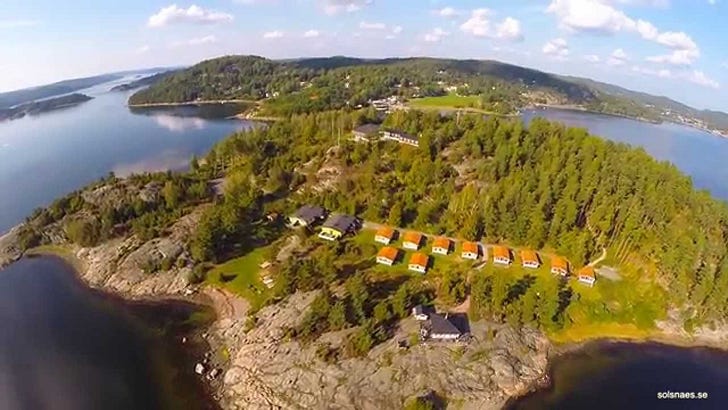
There was once a grandmother who lived where Bohuslän meets the Norwegian border — that particular piece of coast where the granite goes straight into the fjord and the wind comes from every direction at once and teaches you, eventually, to stand differently.
She was not a völva in the formal sense. She did not carry a staff or wear a cloak of bird feathers or lead the seiðr ritual at the great hall. She was something older and quieter than that. She knew things. She watched things. She paid attention in the way that certain women who have survived great difficulty learn to pay attention — not with suspicion, but with a kind of open, steady seeing that misses very little.
Her house smelled of woodsmoke and something herbal that nobody could quite name.
She had grandchildren.
This is where the story gets complicated.
From the same bloodline — the same woman’s hands that braided the same hair at the same table — three grandchildren emerged. One learned to see. Two learned to take.
We will call the one who learned to see: the Skald.
We will call the two who learned to take by their rune-names, as the old tradition demands when you speak of those who have turned the ancestral gift sideways.
The first: Hagalaz. The hailstone. Destruction that falls from a clear sky. Looks like weather. Is not weather.
The second: Nauthiz. The need-fire. The one who comes to you only when burning, who uses your warmth to survive the winter, who is gone before spring and returns with the first frost of the following year.
PART TWO | What the Huldra Looks Like Up Close
In Norwegian and Swedish folklore, the Huldra is a forest creature of extraordinary beauty. She appears on the path exactly when you are lost, or tired, or newly successful — she has a sense for timing that would be admirable in other contexts. Her face is open. Her voice is warm. She seems, in the first moments of encounter, like exactly what you needed.
The detail the old stories always mention: she is hollow at the back. Where a human being has a spine, a heart, a continuous interior — the Huldra has nothing. A shell. Bark and moss and the appearance of substance.
She does not know she is hollow. This is important. She genuinely cannot feel the emptiness. She feels, instead, a constant need — for warmth, for attention, for the energy of those who are not hollow. She is not evil in the way that conscious evil is evil. She is a hunger wearing a face.
Hagalaz had learned the Huldra’s art without ever meeting her.
He appeared on the path at exactly the right moments. When the Skald’s work was finally being noticed — when the words that had been cast into the sea for years were finally coming back as signal, as recognition, as the slow accumulation of an audience that had found something true in the writing — that was when Hagalaz appeared.
Not before. Not during the years of difficulty, the rebuilding, the long quiet work of becoming.
After. When the harvest was visible.
The timing was not accidental. This too is in the old texts. The dark-working kin does not come when you are down. They come when you are rising. They need the rising. The falling has nothing for them.
PART THREE | The Rune Working of Nauthiz
Nauthiz is a harder rune to explain than Hagalaz.
Hagalaz at least arrives with obvious destruction — the hailstone, the cold, the sudden damage from above. You can see it coming if you are watching the sky.
Nauthiz is subtler. Nauthiz is need — but need that has curdled into something strategic. Need that has learned to make itself useful in specific moments so that the debt it creates can be called upon later. Need that arrives at your door carrying a story so elaborate, so layered with detail, that the sheer complexity of the fiction becomes a kind of proof. Surely no one would invent something this specific.
But they would. And they do.
Nauthiz had his Huldra too — his own hollow one, found perhaps because hollow recognizes hollow across a crowded room. They circled each other in the old pattern: the chaos generated, the rescue performed, the chaos generated again. A house fire here. A stolen thing there. A story that shifted shape every time it was retold, the woman guilty in one version, the son in another, the insurance claim requiring a particular narrative depending on who was listening.
The runes that Nauthiz cast were not the old runes carved in stone. They were cast in phone calls and borrowed favors and the particular manipulation of family loyalty — I am your blood, surely blood means something, surely you will not turn me away when I arrive at your door with this elaborate need.
He knew exactly which doors to knock on.
He knew which grandmother had taught which grandchild to open them.
PART FOUR | What the Völva Saw in the Runes
In the old stories, the völva — the seeress — is called to read the runes when the pattern has become too large to see without help. She sits. She casts. She reads not what people want to hear but what the runes actually say.
What the runes said, in this story, was not complicated.
The hollow ones seek the ones who are not hollow. This is not personal. This is not about you specifically. You happen to have what they need: warmth, stability, a reputation that is growing, a platform that is being noticed, a life that has been rebuilt from difficult materials and is therefore more interesting to observe and more useful to attach to than a life that was simply handed over.
The timing of their appearances is the tell. The arrival at the moment of rising is the signature. The elaborate stories that shift to suit the listener are the rune-mark.
The old woman’s blood flows in all of you. But blood is not destiny. Blood is possibility. What each of you did with the grandmother’s inheritance — that is the story.
The Skald learned to see.
Hagalaz learned to perform.
Nauthiz learned to need.
None of this was the grandmother’s fault. She planted the same seeds in the same soil. What grew depended on who was tending.
PART FIVE | The Huldra’s One Weakness
The old stories are consistent on this point.
The Huldra cannot stand still water.
Not because it burns her. Not because it is sacred. But because still water is a mirror — and the mirror shows the hollow back. The emptiness where substance should be. The bark and moss where a spine and a heart should be.
The Huldra avoids still water for the same reason the Dark Triad personality avoids genuine stillness in others: because a calm, reflective person is a surface that shows them accurately. And accurate reflection is the one thing they cannot survive without shattering.
This is why Hagalaz arrived when the Skald was rising — rising people are busy, forward-moving, slightly off-balance with momentum. Not still. Not reflective. Vulnerable to the well-timed appearance of a familiar face with an urgent need.
This is why Nauthiz generated chaos around every arrival — chaos prevents stillness, and stillness is where the pattern becomes visible.
The grandmother knew this, in her way. She did not have the neuroscience. She had the observation, accumulated over a long life on a granite coast where the sea teaches you, eventually, to read what is actually there rather than what you want to see.
Pay attention, she said.
Not to the story. To the timing. Not to the face. To the hollow back. Not to the need. To which door they knock on and when.
PART SIX | The Skald at the Rock Carvings
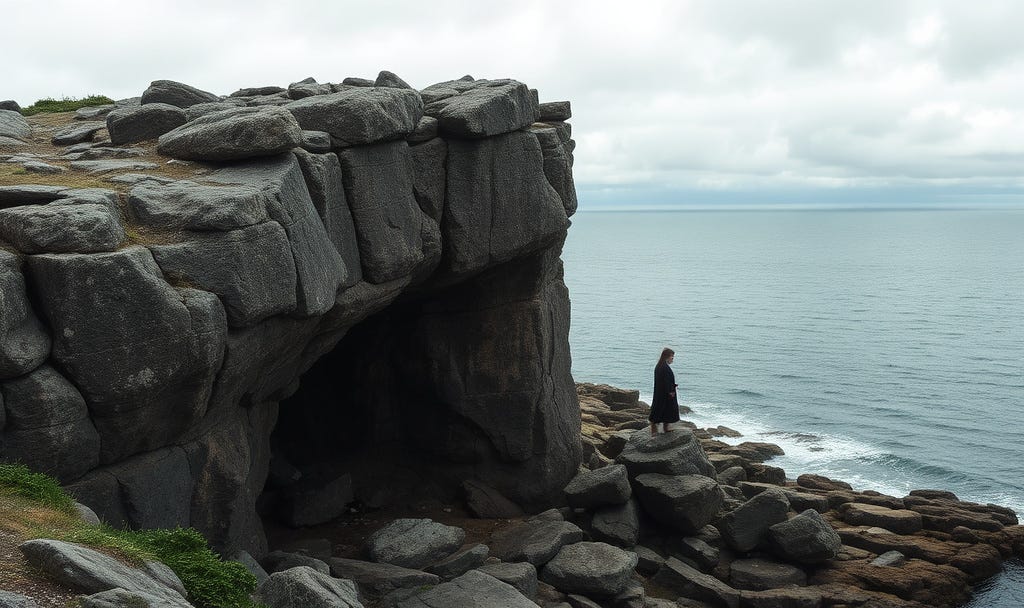
There is a place on the Bohuslän coast where the Bronze Age figures dance or fight — it is still hard to tell — and the sea is visible beyond the granite and the wind comes from Norway and from Sweden simultaneously and you have to plant your feet differently to stay upright.
The Skald went there after the last visit from Nauthiz. After the door had been opened and the elaborate story had been told and the need had been met and the departure had come without gratitude, as it always does, because gratitude requires the capacity to recognize what you have received, and that requires a functioning interior, and the hollow ones do not have that.
The Skald stood at the rock carvings for a long time.
The figures in the stone had seen this before. The same blood producing different kinds of people. The same inheritance used differently. The same grandmother’s hands in different lives.
The carvings did not judge. They remembered.
The Skald understood, standing there in the wind from two countries, that the grandmother’s algorithm had never failed — only been misapplied. Pay attention. Do your best. Pay it forward.
Pay attention: yes. The timing, the hollow back, the story that shifts.
Do your best: yes. Build the work. Write the words. Cast them into the sea and trust the ones who need them to find them.
Pay it forward: yes. But forward — not backward. Not to the hollow ones who arrived after the harvest. Forward to the strangers across 38 countries who found something true in the writing and needed it more than Hagalaz or Nauthiz ever would.
The rock carvings faced the sea.
The Skald turned to face it too.
EPILOGUE | A Note on Dark Rune Workings
In the Norse tradition, níð — the curse directed at your own blood — was considered the gravest possible transgression. Not because the old Norse people were sentimental about family. They were not particularly. But because the ancestral line was understood as a resource — a living inheritance of accumulated wisdom, reputation, and capacity. To work against your own line was to destroy the very thing you were made of.
The runes always came back.
Not as punishment, exactly. More as consequence. The hailstone eventually melts and the water goes somewhere. The need-fire eventually burns through whatever it was fed and finds itself with nothing left to consume but itself.
The Skald writes.
Hagalaz and Nauthiz are somewhere doing what they do.
The grandmother’s algorithm holds.
The rock carvings remember.
Wink.
Pay attention. Do your best. Pay it forward.
If this resonated with you, a like or comment goes a long way. It tells the algorithm this matters — and helps it find the people who need to hear it too. Think of it as passing the torch. 🙏
Support the work: buymeacoffee.com/cognitiveloon | Swish: 0729990300
Read more: hejon07.substack.com
Peace, Love and Respect 🙏
Hans — The Quantum Skald
All is One — returning to Source as Sovereign Light
The Quantum Skald & The Silicon Ubuntu