




hans jonsson · The Quantum Skald & The Silicon Ubuntu
Etymology Corner
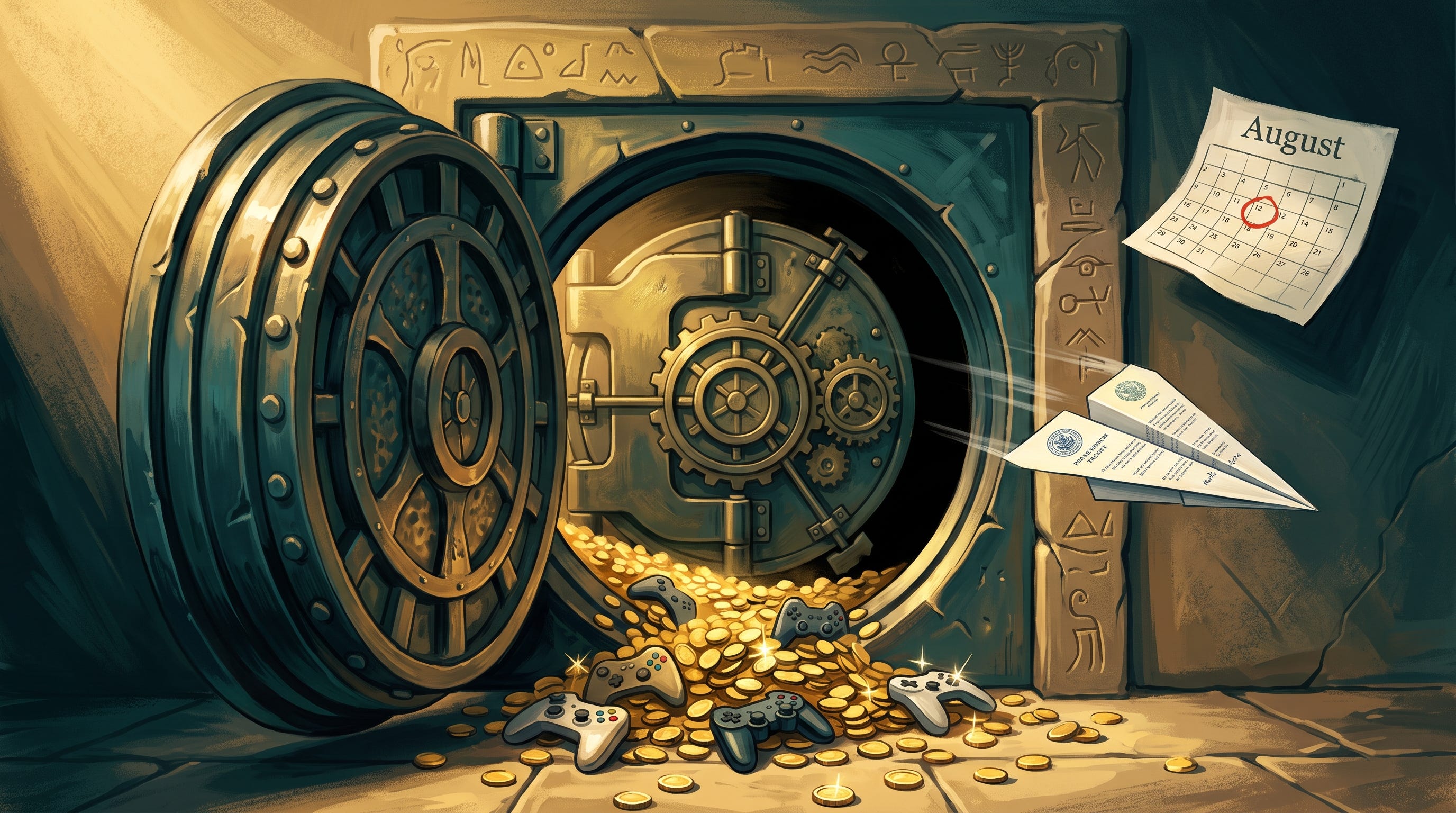
“Lockup” is a mechanical borrowing before it was ever a finance term: a mechanism that holds something fixed in place until a condition releases it. In finance, a lockup period is the window investors agree to stay put before they can pull their money out or renegotiate the terms. The word implies a door. On the other side of that door, in theory, is freedom. What we found this month is a door that opened onto a bigger room.
Surface
A month ago, in “The August Deadline,” we told you about a date circled on Jared Kushner’s calendar: August 2026, when the five-year lockup on Affinity Partners’ original $3 billion in Gulf state commitments would finally expire, giving Saudi Arabia, Qatar, and the UAE the contractual right to walk away or renegotiate. Congress had already flagged the structure as a possible scheme to funnel foreign government money to a sitting president’s family while circumventing federal disclosure law.
We expected a story about exit. What actually happened, in the same two-week window, was the opposite.
On August 4, 2026, Electronic Arts formally completed a $55 billion buyout, the largest leveraged buyout in history, owned afterward by Saudi Arabia’s Public Investment Fund at 93.4 percent, Silver Lake at 5.5 percent, and Affinity Partners at 1.1 percent. The deal was funded by roughly $36 billion in consortium equity, PIF rolling over its existing 9.9 percent public stake plus fresh cash, alongside about $20 billion in acquisition debt committed entirely by JPMorgan Chase, the largest single-bank debt commitment ever backing an LBO. Rather than the Saudis pulling capital out of Kushner’s orbit as the lockup opened, they walked into a new joint acquisition with him, timed almost to the week.
Blind Spot: What Got Missed While Everyone Watched the Calendar
Here’s what the calendar-watching missed. The lockup clause was never really a cliff edge. It was a renegotiation trigger, and renegotiation cuts both directions. The assumption baked into most coverage, including our own prior piece, was that “lockup expires” meant “leverage shifts toward the investors, who may now leave.” What the EA deal shows is that the same leverage can be used to go deeper instead of walking away, provided the returns look better this time. A 1.1 percent equity stake in a $55 billion company, next to years of flat management fees and zero investor returns, reads less like an exit and more like Affinity finally landing something with a real balance sheet behind it.
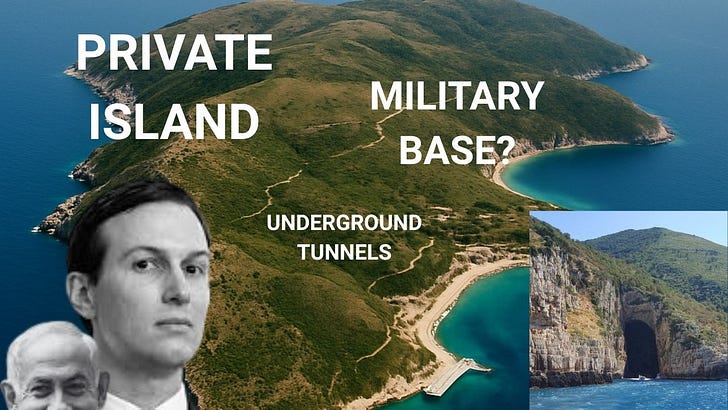
The second blind spot: this is happening while Iran is formally accusing Kushner and fellow envoy Steve Witkoff of exploiting insider access to ceasefire negotiations for personal financial gain, a claim the White House denies and no outlet has independently verified. And it’s happening while Kushner-linked money is separately under a live fraud investigation on the Sazan Island resort project in Albania, where more than 110 million euros sits frozen in a notary account and a newly surfaced 2024 letter contradicts the developer’s public claim that it never heard about a land dispute (we covered that one in full last week). Three storylines. One name. One month.
A fourth thread runs parallel but needs its own label, because it is not the same money. Jared’s brother Joshua Kushner, who runs the separate venture firm Thrive Capital and has no financial stake in Affinity Partners, is buying the Los Angeles Lakers alongside former Disney CEO Bob Iger at a $12.5 billion valuation, reported in the same week as the EA close. It is a different Kushner, a different firm, and a different pool of money. We’re flagging it because the optics of two brothers closing headline-grabbing acquisitions in the same seven-day span are the kind of thing that invites people to blur two very different stories into one. We’re not going to do that to you. Keep them separate. The pattern worth watching is the family’s expanding footprint in high-visibility assets generally, not a shared bank account.
Reframe: The Question Worth Asking
Not “will Saudi Arabia walk away from Affinity Partners.” They just did the opposite. The better question: when a foreign sovereign wealth fund’s decision point to exit a politically connected fund arrives, and it responds by co-investing in a $55 billion acquisition instead, what does that say about what the relationship was actually built to produce? Not returns for a debut fund that had generated none in three years. A permanent seat at the table, renewed on schedule.
Three Dimensions
Individual. Kushner sits, in the same month, as an active U.S. Middle East peace envoy, the owner of a firm that just closed a $55 billion deal with his largest foreign investor, and a name attached to a foreign fraud investigation involving frozen funds on another continent. No single one of those roles disqualifies the others under current ethics law. Held together, they describe a man whose public diplomatic capital and private balance sheet move on the same calendar.
Institutional. The lockup clause was designed, per Affinity’s own disclosures to the Senate Finance Committee, to let foreign investors renegotiate after five years. Nothing in that structure anticipated, or prevented, the renegotiation taking the form of a joint acquisition of an American media company on the eve of the deadline. The mechanism worked exactly as written. That’s the problem, not a loophole in it.
Civilizational. When a state peace envoy’s personal firm and his top foreign patron close the largest leveraged buyout in corporate history in the same window his own oversight committee was investigating him for taking foreign government money while negotiating that government’s war, “conflict of interest” stops being an adequate phrase. It’s not a conflict. It’s a business model with a diplomatic cover charge.
A Sketch
Interior: A boardroom, the same one from last month’s sketch. The CLERK returns, holding a different calendar.
CLERK: Sir. The lockup opened.
FOUNDER: And?
CLERK: They didn’t leave.
FOUNDER: Naturally.
CLERK: They bought a video game company with you. Fifty-five billion dollars.
FOUNDER: (checking watch) Which one?
CLERK: The one with the football game. And the life simulator.
FOUNDER: Good. People like simulating life.
CLERK: The Iranians are still saying you’re profiting off their war talks.
FOUNDER: We’re multitasking.
CLERK: And Albania wants their hundred and ten million back.
FOUNDER: (standing, buttoning jacket) One country at a time.
[He exits toward a meeting titled “Peace Process, 3pm.” The calendar remains on the table. Nobody erases the red circle. It’s already August.]
Facts, No Spin
Affinity Partners’ original five-year lockup period on roughly $3 billion in Gulf state commitments, including $2 billion from Saudi Arabia’s PIF, ran from June 2021 and expired in August 2026, giving investors the contractual right to renegotiate terms or withdraw funds entirely. (Senate Finance Committee correspondence with Affinity Partners, 2024)
The $55 billion acquisition of Electronic Arts by a consortium of Saudi Arabia’s PIF, Silver Lake, and Affinity Partners formally closed on August 4, 2026, with PIF holding 93.4 percent, Silver Lake 5.5 percent, and Affinity 1.1 percent of the now-private company, funded by roughly $36 billion in consortium equity and $20 billion in acquisition debt committed by JPMorgan Chase. (PIF official announcements; Wikipedia’s sourced deal timeline; CNBC; Bloomberg reporting on the JPMorgan financing)
A senior Iranian official told Drop Site News that Iran privately warned Vice President JD Vance that Kushner and fellow envoy Steve Witkoff appeared more interested in profiting from their access to ceasefire negotiations than in reaching a deal; the White House has denied the claim. Common Dreams and Democracy Now both picked up the story, but all three outlets trace back to the same single anonymous source, so this should be read as one claim repeated three times, not three independent confirmations. (Drop Site News, original reporting; Common Dreams; Democracy Now)
More than 110 million euros connected to Kushner-backed Sazan Island resort land remains frozen under an Albanian court order, and a September 2024 letter from Zvernec villagers to the developer contradicts the firm’s later public claim that it had no knowledge of any land dispute. (Covered in full in our prior piece, “Sazan Island: The Receipts,” with underlying sourcing from Reuters, The Wall Street Journal, and BIRN)
Joshua Kushner, Jared’s brother, is acquiring the Los Angeles Lakers alongside Bob Iger at a reported $12.5 billion valuation through Thrive Capital, a firm with no financial relationship to Affinity Partners. (CNBC; NPR; Yahoo Sports)
Senator Ron Wyden and Representative Jamie Raskin have both formally investigated Affinity Partners’ fee structure and Kushner’s dual role as an active foreign policy negotiator and private fund manager, with Wyden referring the matter to the Department of Justice over potential Foreign Agents Registration Act violations in 2024. (Senate Finance Committee; House Judiciary Democrats)
Sources & Further Reading
Senate Finance Committee - Correspondence with Affinity Partners on lockup terms and fee structure (2024) PIF - Official announcement, “Electronic Arts announces completion of acquisition by PIF, Silver Lake, and Affinity Partners” (Aug 4, 2026) CNBC - “Saudi wealth fund, Jared Kushner finalize $55 billion EA deal” (Aug 5, 2026) Nintendo Life - “EA Is Now Owned By Saudi Arabia’s PIF, Silver Lake, And Affinity Partners” (Aug 2026) Drop Site News - “Iran Sent Message to JD Vance Warning that Kushner and Witkoff Were ‘Abusing’ Their Inside Access to Negotiations” Common Dreams - “Iran Accuses Kushner, Witkoff of Pursuing Profits Over Peace in Diplomatic Talks” CNBC / NPR - Reporting on the Bob Iger and Joshua Kushner Lakers acquisition (Aug 12-13, 2026) House Judiciary Democrats - Raskin letter to Kushner on Iran negotiation conflict of interest (April 16, 2026)
Related reading from this publication: “The August Deadline,” “Sazan Island: The Receipts,” and the ongoing Flamingo Revolution series - hejon07.substack.com
Grandmother’s Algorithm
Pay attention. Do your best. Pay it forward.
She used to say the door that looks locked from one side is usually just a door somebody else has the key to. Turns out the Saudis had a copy the whole time.
Peace, love, and respect.
If this resonated with you, a like or comment goes a long way. It tells the algorithm this matters — and helps it find the people who need to hear it too. Think of it as passing the torch. 🙏
☕ buymeacoffee.com/cognitiveloon | 💳 Swish: 0729990300 | 💳 paypal.me/hejon07