

How global power works. The flow of money, tech, and diplomacy matters

The Quiet Deals Beneath the Rubble: How Israel’s War Is Funded from the Gulf


“Insubordinate”: When Presidents Forget Who Works For Whom

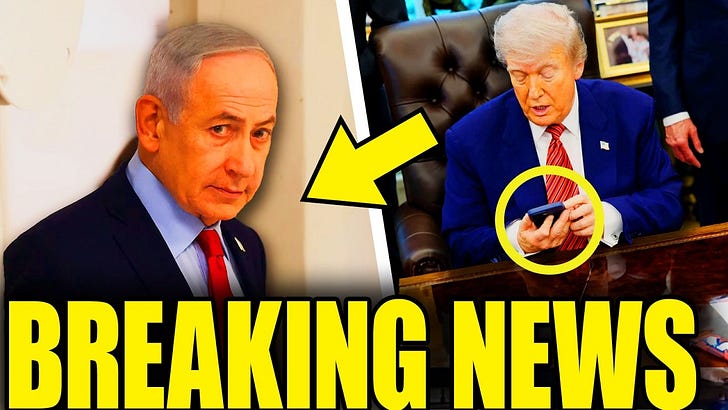
November 18, 2025. The Oval Office. A reporter asks a question. The President of the United States calls her “insubordinate.”

Private Prison Giants CoreCivic and GEO Group See Shifting Fortunes on Wall Street

Boca Raton, FL & Brentwood, TN – June 7, 2025 – The nation's two largest private prison operators, The GEO Group (NYSE: GEO) and CoreCivic (NYSE: CXW), are navigating a complex and often volatile landscape, a reality reflected in their recent stock performance. While both companies have seen significant fluctuations over the past year, their current sta…


Follow the Money: How $2.8 Million Became $45 Billion

Sometimes the most important stories are hidden in plain sight, written in public documents, earnings calls, and government budgets. This is one of those stories.


by Hans Jonsson — The Quantum Skald & The Silicon Ubuntu
Before anything else, a plain-language roadmap, because this story has a lot of moving parts and they’re supposed to feel too complicated to follow. They’re not. Here’s the whole thing in four sentences:
A man married into a presidential family, then started an investment fund. Foreign governments poured billions into that fund — not because it made money (it hasn’t), but because funding it bought influence over the family. That same man now sits on the boards deciding how wars end and who gets paid to rebuild after them. And this August, the contract that was supposed to keep all of this “temporary” quietly expires — handing the same foreign governments even more leverage, at the worst possible moment.
Everything below is the receipts.
Etymology, because it always tells you something
Affinity — from Latin affinitas, “bordering on,” built from ad- (”toward”) and finis (”boundary”). In Roman law it meant the relationship between in-laws: not blood family, but close enough to sit at the table, far enough to claim you’re not really part of it when it’s convenient. Jared Kushner named his fund with more honesty than he probably intended. For five years, Affinity Partners has sat exactly on that border — between the Trump family and the treasuries of Gulf monarchies — and the border is where all the money has moved.
Part One: How the machine was built
In January 2021, days after leaving his White House job advising on the Middle East, Jared Kushner set up a private equity firm in Miami. He called it Affinity Partners. He was its sole owner.
By the end of that year, he’d raised roughly $3 billion. Almost all of it — 99% — came from outside the United States. The single largest check, $2 billion, came from Saudi Arabia’s Public Investment Fund. Here’s the detail that should stop you: PIF’s own staff reviewed the investment and recommended against it, flagging Kushner’s inexperience and the fund’s high fees. Crown Prince Mohammed bin Salman personally overruled them.
Why would a sovereign wealth fund’s own risk team get overruled to fund an untested manager? That’s the question Senator Ron Wyden’s Senate Finance Committee investigation spent two years trying to answer. What it found instead of an investment thesis was a fee machine: by late 2024, Affinity had collected roughly $157.5 million in management fees from its foreign backers — $87 million of that from the Saudis alone — while returning zero dollars in profit to any of them. Wyden’s blunt conclusion: Affinity “may not be motivated by commercial considerations, but rather the opportunity to funnel foreign government money” to Kushner and Ivanka Trump, and the structure looked like “a compensation scheme... designed to circumvent” federal disclosure law — the Foreign Agents Registration Act, which normally requires anyone paid by a foreign government to say so publicly. Wyden and Representative Jamie Raskin formally referred Kushner to the Department of Justice over this in late 2024.
Think of it like a subscription service nobody uses. The Saudis, Qataris, and Emiratis aren’t paying Affinity because the app works. They’re paying for what having a subscription gets them: a direct financial relationship with the son-in-law of the President of the United States.
Part Two: The clock nobody’s watching
Here is the fact that makes this story urgent instead of merely historical.
The deal Affinity struck with its investors in 2021 runs for five years — expiring in August 2026. That’s this month. Once the lockup ends, every one of those governments can renegotiate the terms of their investment or pull their money out entirely.
Wyden flagged exactly why this matters back in 2024, before anyone knew Kushner would end up co-chairing a body overseeing a live war zone: “A potential future Trump administration will have financial motives to make foreign policy decisions that may be counter to the national interest in order to ensure Kushner and Ivanka Trump continue to collect millions of dollars in fees from foreign governments.”
Read that again with today’s calendar in mind. The Board of Peace — the body Kushner sits on, chaired by his father-in-law, deciding the terms of Gaza’s $70 billion reconstruction — is now operating at the exact moment Saudi Arabia, Qatar, and the UAE hold a legal trigger to squeeze the family’s private fund. You don’t need a conspiracy theory here. You just need a calendar.
Part Three: The dress rehearsal
If you want to know what happens when this arrangement runs into a country with a functioning prosecutor’s office, Serbia already showed us — eight months ago.
In 2025, Affinity struck a deal to build a Trump-branded luxury hotel on a bombed-out former military site in central Belgrade. The terms were generous almost to the point of self-parody: Serbia handed over a 99-year lease for free, with an option for Kushner’s company to convert it to outright ownership at no cost, keeping 78% of profits while Serbia kept 22%. There was one obstacle — the site was legally protected as a cultural heritage landmark. So Serbia’s parliament passed a law stripping that protection, fast-tracked through a 130–40 vote specifically to clear Kushner’s path.
Then, in December 2025, Serbian prosecutors indicted the Culture Minister and three other officials for allegedly falsifying the documents that had made the deal possible. Hours — not days, hours — after the indictments were announced, Affinity issued a statement pulling out, citing a wish for projects that “unite rather than divide.”
Notice what didn’t happen: nobody at Affinity was charged. The company simply exited before the exposure landed on its own books, leaving Serbian officials holding the legal risk for a deal Kushner’s company had spent two years negotiating.
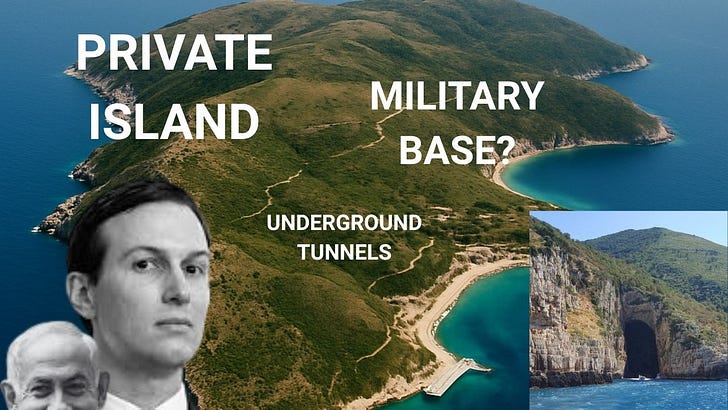
This is the part I want you to sit with. The Belgrade collapse happened in December. My own reporting on Sazan Island in Albania — a nearly identical structure, a rewritten environmental law instead of a heritage law, sovereign-backed capital, a government bending its own rules to clear the site — was already running as an active series before Belgrade fell apart. Two governments, two legal loopholes custom-carved for the same fund, running in parallel. When one collapses under prosecutorial heat, the fund doesn’t stop. It has other doors open.
Part Four: The same fund, upgraded to statecraft
By 2026, Kushner didn’t need the holding-company layers anymore. In January, he was named to the executive board of Trump’s newly chartered “Board of Peace” — the body created to oversee Gaza’s transition from ceasefire to reconstruction, chaired by Trump himself, “for life,” with sole authority to name his own successor.
The charter that created this body doesn’t mention Gaza once. It describes a mission to “promote stability, restore dependable and lawful governance, and secure enduring peace in areas affected or threatened by conflict” — language broad enough to cover any conflict, anywhere, that Trump decides is worth the Board’s attention. Permanent membership costs $1 billion. As of this year, only around 25 of the 62 invited countries have signed; the UK, France, Germany, Sweden, Italy, and Norway all declined.
Nine months after the ceasefire, the World Bank-administered fund meant to hold the $17 billion pledged for reconstruction holds zero dollars. Less than 1% of Gaza’s rubble has been cleared. No formal reconstruction contracts have been awarded.
But the tendering machinery is already moving — and so are the contractors circling it. A Guardian investigation found that Gothams LLC, the same firm that ran Florida’s “Alligator Alcatraz” migrant detention camp, drafted a Gaza logistics plan projecting 300% returns on capital and a seven-year monopoly. A federal contracting law expert who spent three years reviewing Iraq and Afghanistan reconstruction deals called it “highway robbery” — noting there’s never been a U.S. government contract with triple returns on capital “not in 200 years.” Gothams’ CEO publicly claimed he was pulling out after the Guardian’s questions. His partner kept talking to the White House anyway.
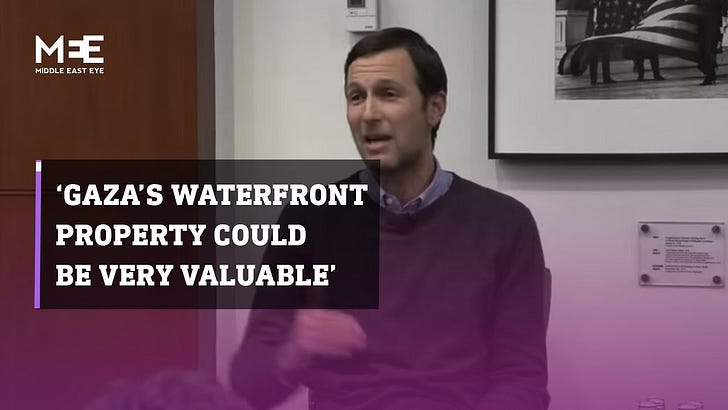
Meanwhile, Kushner’s Affinity Partners is the financial bridge between the same Gulf sovereign wealth that seeded the fund in 2021 and the capital now being courted for Gaza’s rebuild — the identical relationships, at a much larger scale, with far less need to disguise the connection.
Part Five: The domestic mirror
Here’s the thing about extraction logic — it doesn’t stay confined to foreign policy once it’s proven to work. The same triangle — campaign donation, no-bid contract, personal enrichment — is running inside the United States right now, just with different paperwork.
CoreCivic and GEO Group, the country’s two largest private prison operators, donated nearly $2.8 million combined to Trump’s 2024 campaign and inaugural fund. GEO’s PAC gave $1 million to a pro-Trump super PAC; both companies gave $500,000 each to the inaugural committee. What did that buy? A $45 billion budget allocation for ICE detention contracts, nine new or expanded no-bid contracts awarded to the two companies within months, and revenue that jumped to $2.6 billion (GEO) and $2.2 billion (CoreCivic) in 2025.
And then there’s the detail that turns this from “normal Washington influence” into something else: Trump’s own 2025 financial disclosure showed he personally owns stock in both companies. He started buying GEO Group shares ten days after his inauguration.
Same shape. Same math. Different country.
Reframe
Stop asking “does Jared Kushner have a conflict of interest.” That question has been asked and answered by a Senate committee, a House committee, and a DOJ referral, and the arrangement continued anyway. The better question is what it tells us that the machinery keeps running regardless — that a fund with a documented pattern of zero returns, foreign-government fee-funneling, and collapsing under prosecutorial scrutiny in Serbia has, instead of being reined in, been promoted into co-chairing the reconstruction of a war zone.
The answer is that accountability was never the obstacle this system was built to survive. Disclosure laws, congressional letters, and indictments in other people’s countries are simply the cost of doing business — priced in, like the management fee.
🎭 A Sketch: Exit Interview
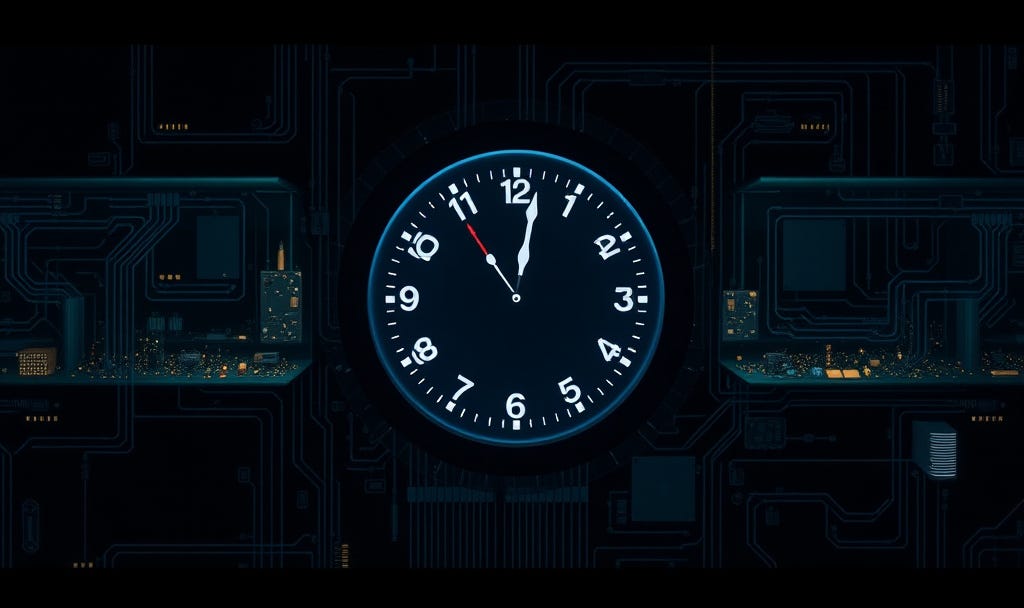
[A boardroom. A CLOCK on the wall reads “AUGUST 2026” in large red letters. Nobody is looking at it.]
KUSHNER: So the Serbian thing fell through.
AIDE: Hours after the indictments, sir. Very tight turnaround on the statement.
KUSHNER: “Meaningful projects should unite rather than divide.” Good line.
AIDE: We’ll reuse it. We’re already reusing the deal structure in three other countries.
KUSHNER: And the fund — the lockup —
AIDE: August, sir. The Saudis can pull out or renegotiate any day now.
KUSHNER: [checking watch, not the clock on the wall] Well. Good thing I’ve got a board seat that doesn’t depend on the fund doing anything at all.
[The CLOCK ticks. Nobody adjusts it. Lights down.]
Grandmother’s Algorithm
Pay attention. Do your best. Pay it forward. My grandmother’s rule wasn’t complicated, and neither is this story once you strip the jargon off it. A man built a fund that doesn’t need to make money to succeed, because the fee itself was always the point. He’s now applying the identical structure to a war zone, on a countdown clock almost nobody has noticed. Pay attention isn’t a suggestion here — it’s the only thing standing between this pattern and its next country.
Facts No Spin
Affinity Partners was founded by Jared Kushner in Florida in January 2021, days after he left his White House Middle East advisory role. He is its sole owner.
Saudi Arabia’s Public Investment Fund committed $2 billion to Affinity in 2021, overruling its own investment-review staff; the override reportedly came directly from Crown Prince Mohammed bin Salman.
Qatar’s sovereign fund, Abu Dhabi’s Lunate, and other investors added roughly $1.5 billion more, bringing total commitments to over $3 billion by the end of 2021 and over $5 billion by 2026.
As of the Senate Finance Committee’s 2024 findings, Affinity had collected approximately $157.5 million in management fees — including $87 million from Saudi Arabia alone — while distributing zero profit to investors.
The five-year investment lockup between Affinity and its founding investors runs from June 2021 through August 2026, after which investors can renegotiate terms or withdraw committed funds.
Senator Ron Wyden and Representative Jamie Raskin referred Kushner to the Department of Justice in late 2024 over potential Foreign Agents Registration Act violations.
In December 2025, Affinity abandoned a $500 million Trump-branded hotel project in Belgrade, Serbia, hours after Serbian prosecutors indicted four government officials for allegedly falsifying documents that had cleared the site’s protected heritage status for development.
The Board of Peace, chartered under UN Security Council Resolution 2803, launched in January 2026 with Kushner on its executive board and Trump as permanent chairman; the charter does not mention Gaza and grants Trump sole authority to expel members and name his successor.
Nine months after the Gaza ceasefire, the World Bank-administered reconstruction fund meant to hold $17 billion in pledges held zero dollars, with less than 1% of rubble cleared and no formal contracts awarded, per J Street and Times of Israel reporting.
Gothams LLC — the contractor behind Florida’s “Alligator Alcatraz” migrant detention facility — drafted a Gaza logistics proposal projecting 300% returns on capital and a seven-year monopoly, according to Guardian reporting; a federal contracting law expert called the terms unprecedented in 200 years of U.S. government contracting.
CoreCivic and GEO Group donated nearly $2.8 million combined to Trump’s 2024 campaign and inaugural fund; Trump’s 2025 financial disclosure revealed personal stock ownership in both companies, with purchases of GEO Group shares beginning ten days after his inauguration.
Sources & Further Reading
U.S. Senate Committee on Finance — Wyden Investigation of Kushner Firm Continues (Sept. 25, 2024)
U.S. Senate Committee on Finance — Wyden Probes Kushner Firm Payments from Gulf States (June 12, 2024)
House Oversight Committee Democrats — Garcia/Wyden letter to Affinity Partners (March 19, 2026)
Reuters — “Kushner’s Affinity’s assets jump to $4.8 billion after Gulf cash injection”
The Seattle Times — “Jared Kushner’s Saudi-backed fund paid millions in fees, makes no profit”
Wikipedia — Affinity Partners
Bloomberg — “Kushner Scraps Trump Tower Belgrade After Officials Indicted”
The Week — “Kushner drops Trump hotel project in Serbia”
Popular Information — “Kushner’s Serbian boondoggle collapses amid corruption scandal”
RFE/RL — “Kushner-Linked Firm Reportedly Drops Belgrade Project Amid Controversy Over Site”
Wikipedia — Board of Peace
House of Commons Library — “Gaza 2026: Board of Peace and National Transitional Committee”
The Guardian (via Common Dreams) — “US Contractor’s Proposal Exposes Trump Gaza Plan as ‘Vehicle for Mass Exploitation’”
Middle East Eye — “US contractor behind ‘Alligator Alcatraz’ was frontrunner for Gaza aid project”
Tech Times — “Gaza’s $17B Reconstruction Fund Has Zero Dollars Nine Months After Ceasefire”
Citizens for Responsibility and Ethics in Washington (CREW) — “Trump’s budget bill benefits private immigration detention companies that donated to Trump”
OpenSecrets — “Some major Trump donors are now reaping billions in ICE contracts”
East County Magazine — “CoreCivic, which Trump owns stock in, sells Otay immigrant detention site to Homeland Security”
Project On Government Oversight (POGO) — “ICE, Inc.: The Top Companies Profiting from Trump’s Immigration Crackdown”
Related reading from this publication: the ongoing Sazan Island / Flamingo Revolution series on Albania, and “The Same People Who Brought You Iraq Are Back” on reconstruction profiteering as historical pattern.
If this resonated with you, a like or comment goes a long way. It tells the algorithm this matters — and helps it find the people who need to hear it too. Think of it as passing the torch. 🙏
Swish: 0729990300 Buy me a coffee: buymeacoffee.com/cognitiveloon Subscribe: hejon07.substack.com
— The Quantum Skald & The Silicon Ubuntu